Tabla de contenidos
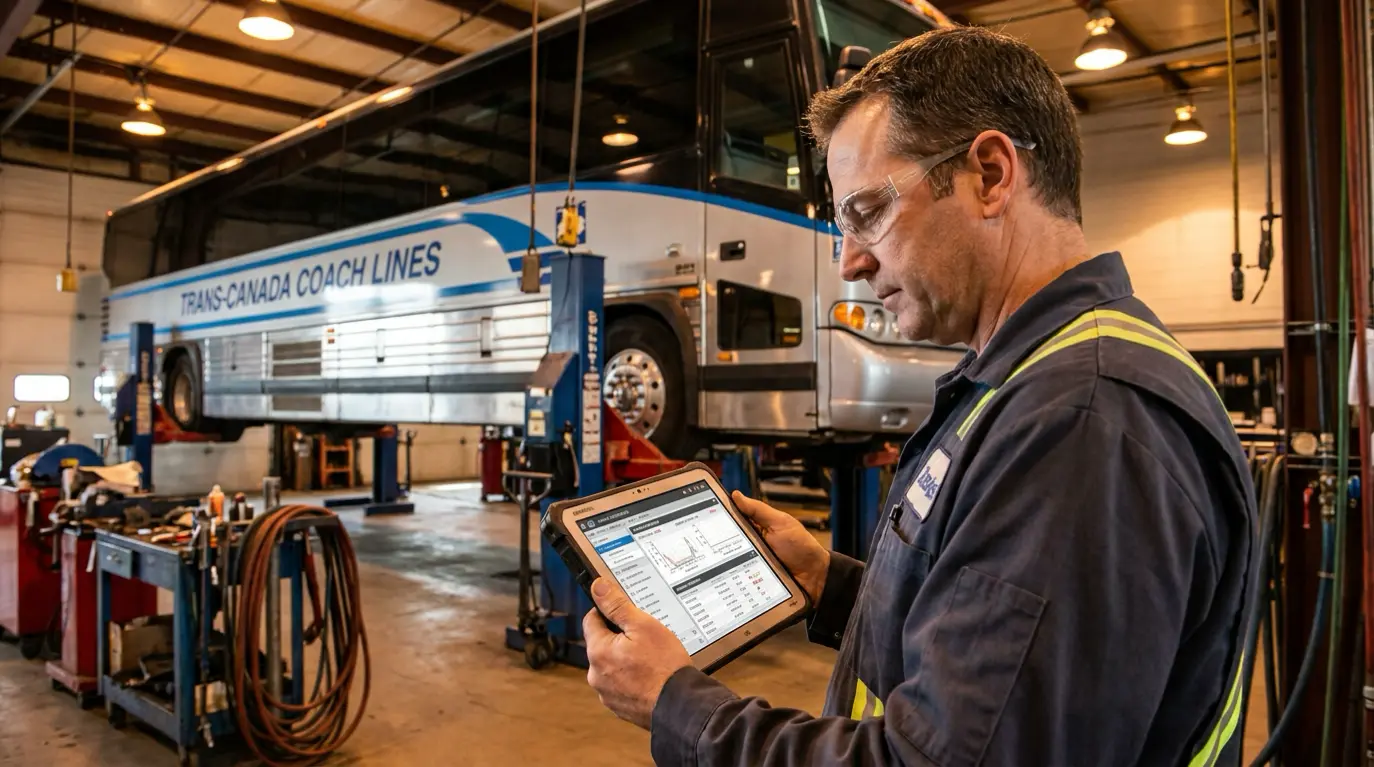
Predictive maintenance has moved from factory floors to fleets, powered by sensors and data analysis that spot wear before it becomes failure. This guide explains what it is, how it works, how it differs from preventive maintenance, and why it can save a vehicle fleet serious money.
What is predictive maintenance?
Predictive maintenance (PdM) is a proactive maintenance strategy that uses real-time sensor data and analytics to detect early signs of wear and predict when equipment is likely to fail, so repairs happen just before a breakdown, not after. Instead of fixing things on a fixed schedule or waiting for them to break, teams act only when the data says action is needed.
The approach relies on continuous condition monitoring. Sensors track parameters like vibration, temperature, and engine diagnostics, and analytics, increasingly powered by machine learning, interpret that stream to flag anomalies. The goal is simple: catch the subtle warning signs a human inspection would miss, and intervene at exactly the right moment.
How does predictive maintenance work?
Predictive maintenance turns raw equipment data into a forecast of future failures. The process follows a clear chain:
- Data collection. IoT sensors installed on equipment, or built into modern vehicles, continuously gather data such as vibration, temperature, oil condition, and fault codes.
- Data transmission. That data flows, often through the cloud, into a central platform where it can be stored and analyzed in real time.
- Analysis and prediction. Analytics and machine-learning models compare live readings against historical patterns to detect anomalies and estimate when a component is likely to fail.
- Action. The system alerts the team, who schedule the repair at the optimal moment, before the failure but without replacing parts that still have life left.
Common condition-monitoring techniques include vibration analysis, oil analysis, and thermography, each designed to surface a developing problem long before it becomes a breakdown.

Reactive vs. preventive vs. predictive maintenance
To understand why predictive maintenance matters, it helps to see it against the two older approaches.
- Reactive maintenance (run-to-failure) means fixing equipment only after it breaks. It is cheap until something fails at the worst possible moment, and then it is very expensive.
- Preventive maintenance is time-based: service happens on a fixed schedule, like every 5,000 kilometers or every quarter, whether the part needs it or not. It is far better than reactive, but it often replaces components that still had life left, and failures can still strike between scheduled checks.
- Predictive maintenance is condition-based: it watches the actual state of each component and acts only when the data predicts a problem.
This is also where condition-based maintenance comes in. The two terms overlap, and some use them interchangeably, but there is a useful distinction: condition-based maintenance responds to the current measured condition of equipment, while predictive maintenance goes a step further, using trends and analytics to forecast a future failure before the threshold is even reached.
Key benefits of predictive maintenance
The benefits of predictive maintenance show up directly on the balance sheet and in daily reliability:
- Less downtime. Catching failures early means fewer unexpected breakdowns and more assets in service.
- Lower maintenance costs. Parts are replaced based on actual condition, eliminating both emergency repairs and unnecessary scheduled work.
- Longer asset life. Addressing wear at the right time extends the useful life of expensive equipment.
- Greater safety. Fewer in-service failures means a safer operation for everyone involved.
- Smarter budgeting. Predictable, data-backed maintenance makes costs easier to plan for.
Predictive maintenance for fleets
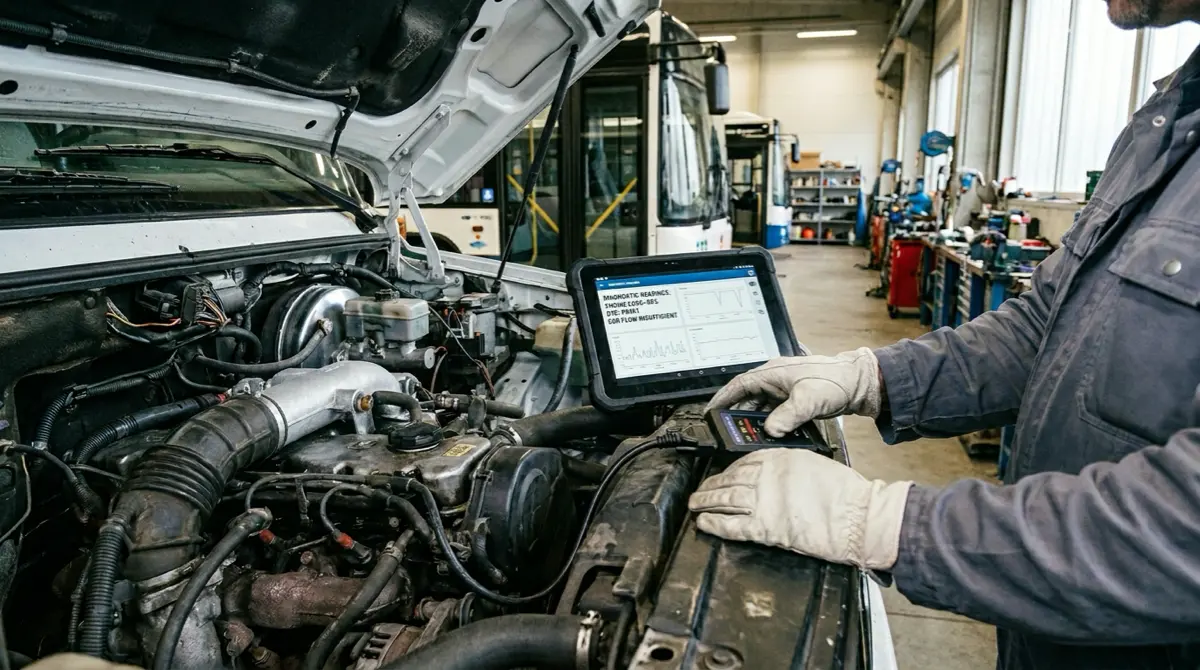
Most predictive maintenance content focuses on factory machinery, but vehicles are an ideal use case, because modern fleets already generate the data the strategy needs. Through telematics and onboard diagnostics (OBD), every vehicle continuously reports engine data, fault codes, and performance metrics, exactly the raw material predictive maintenance runs on.
For a bus operator, the payoff is direct. Predicting that an alternator or brake component is degrading lets the workshop service it during planned downtime instead of on the side of a highway with a full load of passengers. That single shift, from reactive roadside failures to planned interventions, protects both revenue and reputation. It is one of the most advanced layers of a strong fleet management strategy, and it builds naturally on the same telematics used for driver behavior monitoring. As AI continues to reshape transportation, these predictions only get more accurate.
The challenges of predictive maintenance
Predictive maintenance is powerful, but it is not free or instant. The main hurdles are the upfront investment in sensors and software, the need for clean and consistent data to make accurate predictions, and the expertise required to interpret results and act on them. Done poorly, a faulty sensor or a misread signal can trigger false alarms. For most growing fleets, though, the cost of one major roadside breakdown often justifies the investment many times over.
Frequently asked questions
What is the difference between preventive and predictive maintenance?
Preventive maintenance follows a fixed time or usage schedule, regardless of a component’s actual condition. Predictive maintenance uses real-time data to act only when the data indicates a failure is approaching, avoiding both unnecessary work and unexpected breakdowns.
Is predictive maintenance the same as condition-based maintenance?
They are closely related and sometimes used interchangeably. The distinction is that condition-based maintenance responds to current measured conditions, while predictive maintenance also forecasts future failures using trends and analytics.
What data does predictive maintenance use?
It relies on sensor data such as vibration, temperature, oil condition, and, for vehicles, engine diagnostics and fault codes gathered through telematics and OBD systems.
Does predictive maintenance work for vehicle fleets?
Yes. Modern vehicles already generate the telematics and diagnostic data predictive maintenance needs, making fleets one of the most practical and cost-effective applications.
Predictive maintenance is the shift from guessing or waiting to knowing, using the signals equipment already produces to fix problems before they cause failures. For vehicle fleets, where a single breakdown can strand passengers and wreck a day’s schedule, that shift translates directly into saved money and protected reputation. See how the QuatroBus platform helps operators keep their fleet healthy and on the road as part of one connected operation.