Tabla de contenidos
- What Is Driver Behavior Monitoring?
- How Does a Driver Behavior Monitoring System Work?
- Key Metrics a Driver Scoring System Tracks
- How Driver Behavior Monitoring Improves Fleet Safety
- The Cost Impact: Where Monitoring Saves Money
- Implementing a Driver Monitoring Program: What It Takes
- Common Concerns About Driver Monitoring (and How to Address Them)
- Frequently Asked Questions
What Is Driver Behavior Monitoring?
Driver behavior monitoring is the process of collecting and analyzing real-time data on how drivers operate vehicles. Using telematics devices, GPS tracking, accelerometers, and increasingly AI-powered dash cams, these systems record specific actions: speed, acceleration, braking force, cornering, idling time, and seatbelt use. The goal is not surveillance for its own sake. It is to identify patterns of risky driving before they result in an incident, and to give fleet managers the information they need to coach drivers, reduce risk, and control costs.
Unlike basic GPS tracking, which answers “where is the vehicle?”, behavior monitoring answers a harder question: “how is the driver operating it, and what does that mean for safety?” The distinction matters. A bus that arrives on time but logged six harsh braking events, three speeding violations, and excessive idling along the way is signaling risk that a location pin on a map will never reveal.
How Does a Driver Behavior Monitoring System Work?
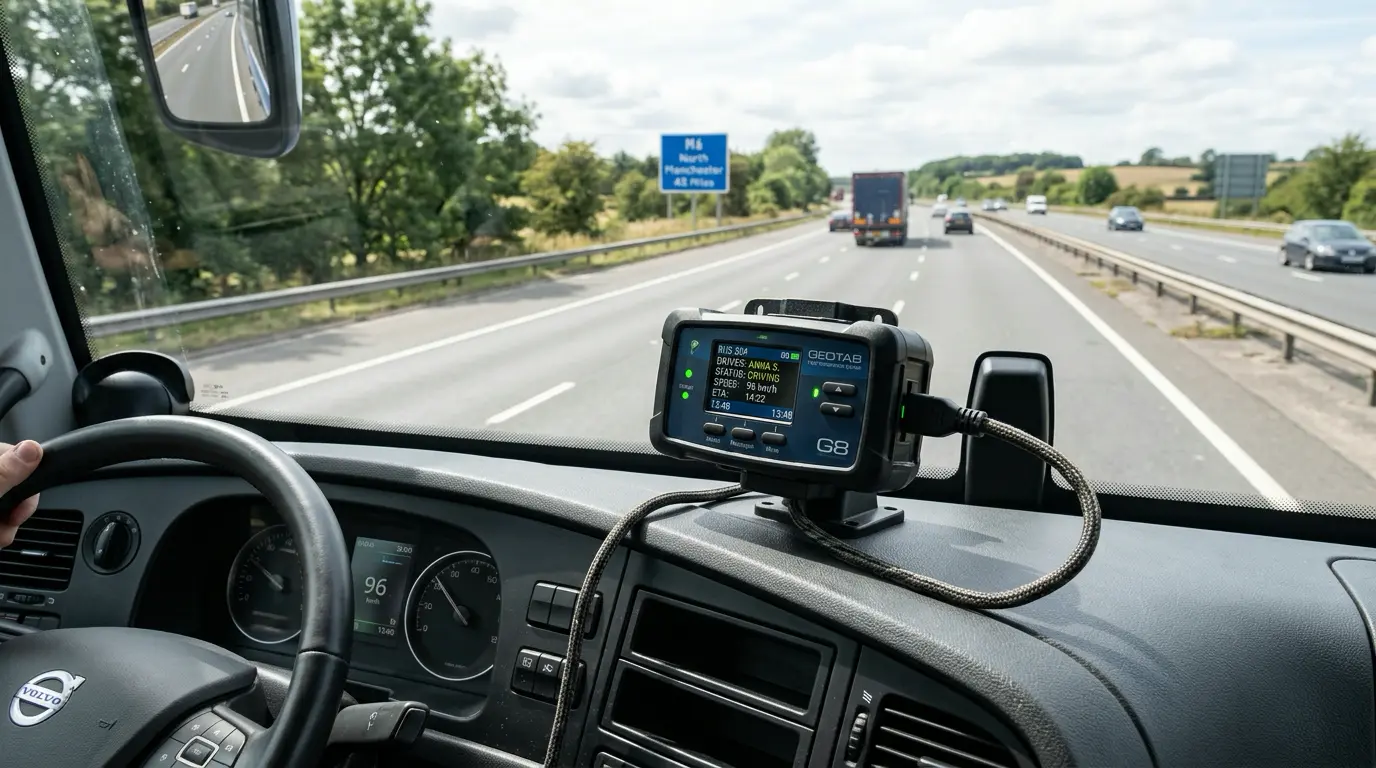
The technology behind these systems combines several layers of data collection and analysis:
- Sensors and telematics devices installed in the vehicle capture raw signals: throttle input, brake pressure, steering angle, engine load, and GPS coordinates. Most modern systems transmit this data in real time through cellular or satellite connections.
- Software algorithms process those signals against configurable thresholds. When a driver brakes harder than the defined limit, accelerates aggressively, or exceeds the posted speed, the system logs it as an event.
- Contextual analysis adds another dimension. Advanced platforms cross-reference driving events with road type, traffic density, weather conditions, and time of day. A hard brake at a school zone during pickup hours is scored differently than one caused by a vehicle cutting in front on a highway.
- Dashcams with AI detect behaviors that sensors alone cannot: phone use, drowsiness, distracted gaze, and seatbelt compliance. Some systems provide real-time in-cab alerts (audio or visual) the moment they detect a risk, allowing the driver to self-correct immediately.
The result is a continuous stream of data that transforms each trip into a detailed safety profile.
Key Metrics a Driver Scoring System Tracks
A driver scoring system typically assigns each operator a composite score based on weighted metrics. Understanding what goes into that score helps fleet managers prioritize coaching where it matters most.
The core metrics include:
- Harsh braking: Sudden deceleration beyond a set G-force threshold. Frequent harsh braking often signals tailgating, distraction, or fatigue. It also accelerates brake pad and tire wear.
- Rapid acceleration: Aggressive starts waste fuel and increase mechanical stress on the drivetrain.
- Speeding: Both posted-limit violations and speed inappropriate for conditions. Higher speeds correlate directly with more severe outcomes when crashes do occur.
- Harsh cornering: Lateral G-forces exceeding safe limits. For buses, aggressive cornering carries the added risk of passenger injuries and cargo shifts.
- Idling time: Extended engine-on time while stationary burns fuel without productive output. The U.S. Department of Energy estimates that aggressive driving behaviors, including unnecessary idling, can increase fuel consumption by 15 to 30% on highways and up to 40% in urban conditions.
- Distracted driving and fatigue: AI-equipped cameras monitor eye movement, head position, and phone use. The National Safety Council has reported that distracted driving is a factor in roughly 70% of commercial fleet crashes.
Scores are typically displayed on dashboards using a color-coded system (green, amber, red) that makes it easy to identify which drivers need attention without digging through spreadsheets.
How Driver Behavior Monitoring Improves Fleet Safety
The safety case for monitoring is straightforward: you cannot fix what you cannot see. But the mechanism through which it works is worth examining, because it goes beyond simple deterrence.
First, there is the awareness effect. Research from telematics providers shows that 40% of drivers change their behavior after receiving their first safety warning. The knowledge that driving actions are being recorded and evaluated shifts habits even before formal coaching begins.
Second, targeted coaching replaces generic training. Instead of quarterly safety meetings that cover everything broadly, fleet managers can sit down with a specific driver and review the three harsh braking events from Tuesday’s route. That specificity makes feedback actionable. Data from CameraMatics shows that over 12 months, fleets using their system experienced a 37% reduction in harsh braking events and a 42% decrease in speeding events.
Third, monitoring enables pattern recognition. A single speeding event is noise. Repeated speeding on the same route segment every afternoon may indicate unrealistic scheduling pressure, not a reckless driver. Behavior data, analyzed over time, helps managers distinguish between individual skill gaps and systemic operational issues.
For intercity bus operators, the stakes are amplified. Every vehicle carries dozens of passengers. A single serious incident can generate liability exposure, regulatory scrutiny, and reputational damage that threatens the entire business.
The Cost Impact: Where Monitoring Saves Money
Fleet operators who implement fleet safety monitoring programs report savings across several categories:
- Accident-related costs: Industry data indicates that the total cost of a crash with injuries ranges from $25,500 to over $4.5 million when factoring in vehicle repair, medical expenses, litigation, lost productivity, and regulatory penalties. Fleets that adopt telematics-based monitoring see an average 20 to 30% reduction in accident rates, according to multiple industry analyses.
- Insurance premiums: Insurers increasingly reward documented safety programs. According to 2026 market data compiled by Munich Re, fleets with strong telematics scores receive premium reductions of 15 to 30%. For a mid-sized bus company, that can translate to thousands of dollars saved per vehicle per year.
- Fuel consumption: Smoother driving directly reduces fuel spend. Eliminating harsh acceleration, excessive speeding, and unnecessary idling has been shown to save fleets between 10 and 20% on fuel costs annually.
- Maintenance and vehicle lifespan: Gentler driving reduces brake, tire, and drivetrain wear. Some fleet operators report extending vehicle useful life by one to two additional years simply by improving driving habits across their workforce.
- Liability and legal defense: Dashcam footage resolves insurance disputes faster and protects operators against fraudulent claims. Fleets with video evidence report claims settling significantly faster and in their favor more often.
Implementing a Driver Monitoring Program: What It Takes

Deploying a monitoring system is not just a technology decision. It requires planning around people, processes, and clear objectives.
- Define what you want to measure. Start with the behaviors that carry the highest risk and cost for your operation. For a bus company, harsh braking, speeding, and fatigue detection are likely top priorities. Avoid tracking 20 metrics at once; focus on three to five high-impact indicators.
- Choose hardware that fits your fleet. Telematics devices with OBD integration work on most modern vehicles. If your fleet includes older buses, confirm compatibility before purchasing. AI dash cams add significant value but require stable connectivity for real-time alerts.
- Communicate with drivers before installation. This step is non-negotiable. Explain what the system tracks, why it exists, and how the data will be used. Frame the program as a tool for driver protection, not punishment. Drivers who understand that camera footage can exonerate them in false claims tend to support the system rather than resist it.
- Build a coaching workflow. Data without action is wasted investment. Assign someone — whether a safety manager or an operations lead — to review weekly scorecards, conduct one-on-one coaching sessions, and track improvement over time.
- Recognize good performance. Monitoring programs that only flag problems breed resentment. Create a recognition structure for consistently safe drivers: bonuses, public acknowledgment, or additional privileges. Gamification through scorecard rankings can foster healthy competition.
Common Concerns About Driver Monitoring (and How to Address Them)
The most frequent objection from drivers is the feeling of being watched. It is a legitimate concern, and dismissing it undermines trust.
Privacy: Be transparent about what data is collected, who can access it, and how long it is stored. A written data policy, shared with every driver during onboarding, goes a long way. In many jurisdictions, regulations govern in-cab recording, so verify local requirements before activating interior cameras.
Morale: When monitoring is framed as coaching rather than policing, the impact on morale is typically positive. Fleets that lead coaching sessions by recognizing what drivers are doing well before addressing areas for improvement report faster adoption and less pushback.
Cost for smaller operators: Modern telematics platforms offer scalable pricing that works for fleets as small as five vehicles. The return on investment from reduced fuel waste and fewer incidents often covers the subscription cost within the first year.
Frequently Asked Questions
What is driver behavior monitoring?
It is the use of telematics, sensors, and cameras to track how drivers operate vehicles in real time. The system records actions like speed, braking, acceleration, and cornering to identify unsafe patterns and support coaching.
How much can monitoring reduce fleet accidents?
Industry data shows fleets using behavior monitoring experience a 20 to 30% average reduction in accident rates. When combined with active coaching programs, some operators report even steeper declines.
Does driver monitoring lower insurance costs?
Yes. Insurers offer premium discounts of 15 to 30% for fleets with documented telematics-based safety programs. Video evidence from dashcams also reduces claim resolution time.
Can small bus companies benefit from this technology?
Absolutely. Scalable platforms make monitoring accessible for fleets with as few as five vehicles. The cost savings from fuel efficiency, reduced maintenance, and fewer incidents apply regardless of fleet size.
Will drivers resist being monitored?
Initial hesitation is common. However, operators who communicate openly, emphasize driver protection benefits (like exoneration footage), and build recognition programs for safe driving report high adoption rates.
If your company still manages driver performance through periodic ride-alongs and post-incident reviews, the gap between what is happening on the road and what you actually know is wider than it should be. A transport management system with integrated fleet data gives you the visibility to act before problems become costly. Talk to QuatroBus about how to bring your fleet operations into a single platform.