Tabla de contenidos
Every product on a store shelf got there through a chain of decisions: which carrier to use, which route to take, when to ship, and how to prove it all happened on time. Multiply that across thousands of shipments and dozens of carriers, and managing it by spreadsheet becomes impossible. That is the problem a transport management system was built to solve.
For companies that move goods, and increasingly for those that move people, a transport management system has become the backbone that keeps operations efficient, visible, and under control. This guide explains what a TMS is, how it works, what it costs you to operate without one, and why the concept now reaches well beyond freight.
What is a transport management system?
A transport management system (TMS) is a software platform that helps businesses plan, execute, and optimize the physical movement of goods, both incoming and outgoing. It sits within the broader supply chain management ecosystem and centralizes everything related to transportation, from choosing carriers and planning routes to tracking shipments and automating billing.
In plain terms, a TMS turns transportation from a series of disconnected manual tasks into one coordinated, data-driven process. Instead of juggling emails, phone calls, and spreadsheets, operators manage the entire movement of freight from a single platform.
What does TMS stand for?
TMS stands for transport management system (also written as transportation management system). It is sometimes called transport management software or a transportation management solution, but all the terms refer to the same thing: technology that manages the movement of goods from one point to another.
How does a transport management system work?
A TMS works across three connected stages. Understanding them shows why it replaces so many separate tools:
- Planning. The system compares carrier rates and services, selects the most cost-effective option, and plans optimal routes and loads before anything ships.
- Execution. It books the shipment, generates the necessary documentation, and tracks the freight in real time as it moves toward its destination.
- Analysis. It consolidates everything into reports and key performance indicators, so managers can see what is working, what is costing too much, and where to improve.
The power comes from those three stages sharing the same live data. When planning, execution, and analysis run on one platform, the errors, double entries, and blind spots of manual coordination disappear.
Core features of TMS software
Modern TMS software bundles several capabilities that, handled manually, would each demand their own staff and spreadsheets. The most important include:
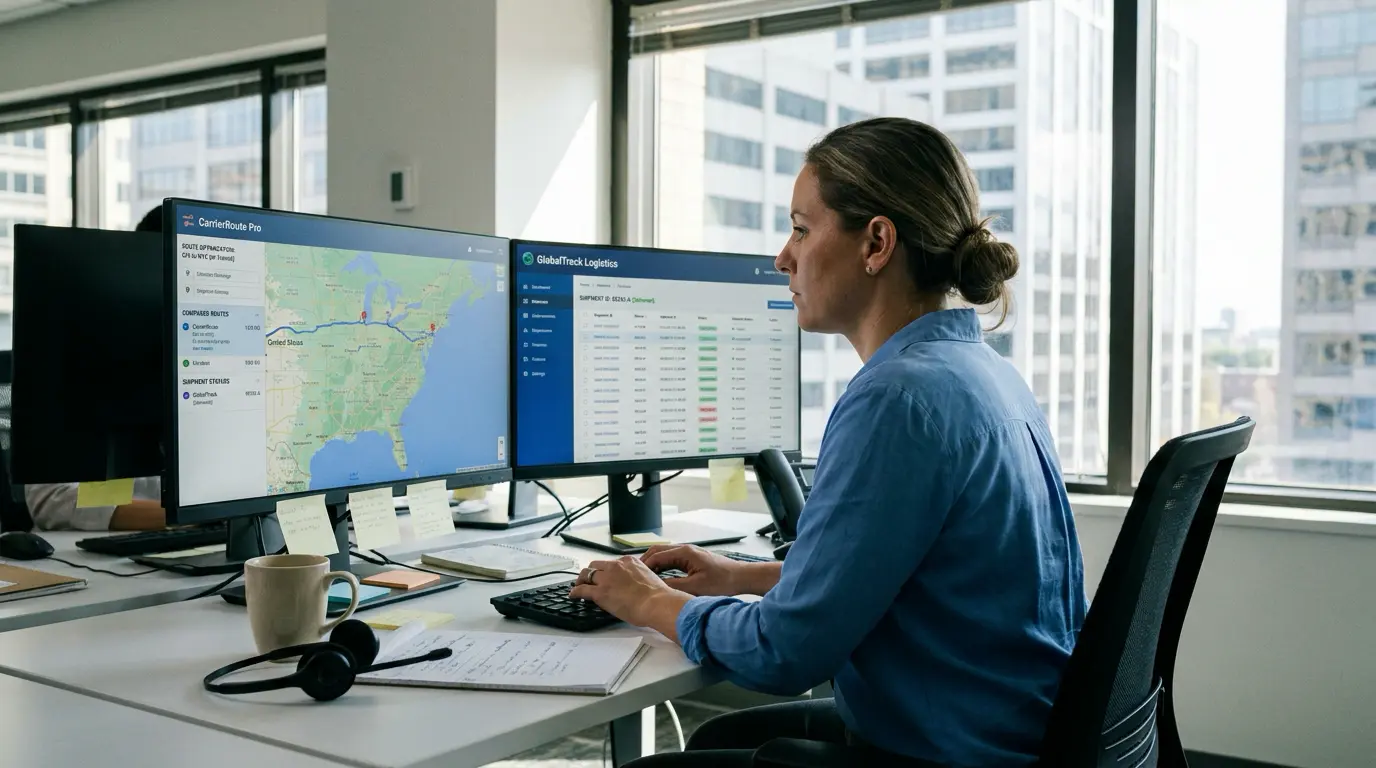
- Route optimization: calculating the most efficient routes to cut transit times and fuel costs. The same logic behind route optimization for transport operators sits at the heart of any good TMS.
- Carrier management: comparing, selecting, and managing carriers and their rates in one place.
- Real-time visibility: tracking shipments and vehicles live, so everyone from dispatch to the customer knows where things stand.
- Load consolidation: combining multiple orders into fuller shipments to reduce cost per unit.
- Automation: replacing paperwork-heavy tasks like booking, tendering, and freight billing with automated workflows.
- Reporting and KPIs: turning raw data into the metrics that drive better decisions.
Key benefits of a transport management system
The value of a TMS shows up directly in the numbers. The most commonly cited benefits are:
- Cost savings. Optimized routes, smarter carrier selection, and consolidated loads lower transportation spend, often the single largest logistics cost.
- Real-time visibility. Knowing exactly where shipments are reduces uncertainty and lets teams react before a delay becomes a failure.
- Efficiency through automation. Automating manual tasks frees staff from spreadsheets and reduces human error.
- Better decisions. With performance data in one place, companies manage by evidence instead of intuition.
- Customer satisfaction. Reliable, on-time delivery with accurate tracking keeps end customers happy and loyal.
TMS vs. ERP vs. WMS: how they differ
These three systems often work together, which is why they get confused. Each has a distinct job.
An ERP (enterprise resource planning) system manages the whole business at a high level: finance, accounting, procurement, and human resources. A WMS (warehouse management system) controls what happens inside the warehouse: receiving, storage, picking, and order fulfillment. A TMS governs what happens once goods leave that warehouse and move toward their destination.
Put simply: the WMS handles goods at rest, the TMS handles goods in motion, and the ERP sits above both, tying the financial and operational picture together. In a mature operation, the three integrate so data flows between them without re-entry.
Beyond freight: TMS for passenger transport
Almost every definition of a TMS assumes you are moving boxes. But the same core idea, planning, executing, and analyzing transportation from one platform, applies just as powerfully to moving people.
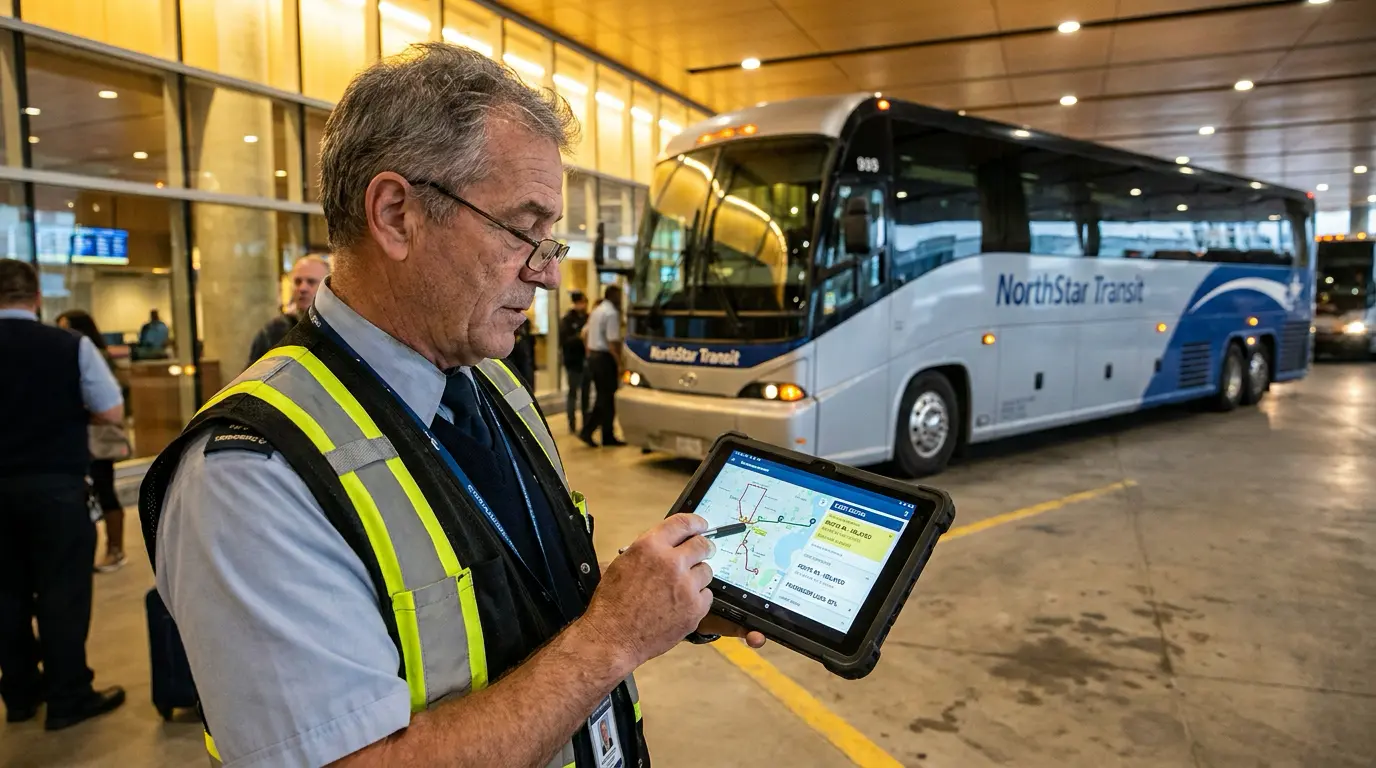
An interprovincial bus company faces the same fundamental challenges as a freight operator: routes to plan, vehicles to assign, schedules to optimize, real-time tracking to maintain, and performance to measure. The difference is that the “cargo” is passengers, and often parcels riding in the same vehicle. For these operators, a passenger-focused TMS connects ticket sales, parcel delivery, fleet management, and billing in a single system, the same way a freight TMS connects carriers, loads, and shipments.
This is where transportation technology is heading. As AI continues to reshape transportation and fleet operations, the line between “logistics software” and “passenger transport software” keeps blurring. The operators who treat their business as a system to be optimized, rather than a schedule to be survived, are the ones pulling ahead.
Frequently asked questions
Is a transport management system only for freight?
No. While most TMS platforms were built for freight and supply chains, the same principles apply to passenger transport. Bus and coach operators use passenger-focused TMS platforms to manage routes, ticketing, parcels, and fleet from one place.
What is the difference between a TMS and an ERP?
An ERP manages the entire business, including finance and HR. A TMS specializes in transportation, planning and optimizing the movement of goods or people. The two often integrate so transportation data flows into the company’s financials automatically.
Does a small company need a TMS?
Increasingly, yes. Cloud-based TMS platforms have made the technology affordable for smaller operators, who no longer need expensive servers. Many systems are modular, so a company can start small and add features as it grows.
Is a TMS cloud-based?
Most modern TMS platforms are cloud-based and delivered as software-as-a-service (SaaS), which makes them easier to access, scale, and update than traditional on-premise systems.
A transport management system is no longer a luxury reserved for global logistics giants. Whether a company moves freight across continents or passengers across a country, a TMS is what turns scattered, manual transportation into one coordinated operation. If your business still runs on spreadsheets and disconnected tools, centralizing everything in a single platform is the step that brings order and visibility. See how the QuatroBus platform brings ticketing, parcels, and fleet together for passenger transport operators.