Tabla de contenidos
Every guide on reverse logistics is written from inside a warehouse. Returns arrive at a dock, get inspected, get restocked. That framing is useless if you run a bus company that also moves parcels, because your returns do not arrive at a dock. They sit in an agency in a town eight hours away, waiting for someone who is never coming to pick them up.
The concept still applies. The operational reality is different, and so is the money involved.
What is reverse logistics?
Reverse logistics is the movement of goods backward through the supply chain, from the end customer toward the seller, the manufacturer or a disposal point. It covers returns, recalls, refused deliveries, packaging and equipment recovery, repairs and end of life handling, and its purpose is to recover value from items that have already been delivered once.
The category is large and growing. Estimates put the global reverse logistics market near 993 billion dollars as of 2023, expanding at a double digit annual rate, driven almost entirely by e-commerce return volumes.
For a carrier, the relevant part of that definition is the phrase already been delivered once. Every item in reverse flow has already consumed capacity, handling and staff time. Whatever it costs from here is a second cost on the same unit.
Forward and reverse are not mirror images
It is tempting to think of reverse logistics as forward logistics run backward. In practice the two behave nothing alike.
- Volume is unpredictable. Forward shipments are booked and planned. Returns appear without notice and cluster after holidays and promotions.
- Units arrive one at a time. Forward flow moves consolidated loads. Reverse flow moves single items from scattered origins, which is the most expensive shape a shipment can have.
- Packaging is compromised. The box has been opened, the tape is gone, the label is torn. Handling takes longer and damage claims increase.
- Condition is unknown until inspection. Forward inventory has a known state. A returned item could be resalable, repairable or worthless, and nobody knows which until someone looks.
- Space requirements are higher. DHL notes that reverse flows can require up to 20 percent more space than forward flows, precisely because items pile up while their disposition is decided.
That last point is where most agency backlogs come from. Space that was designed for parcels in transit ends up storing parcels in limbo.
The five reverse flows a carrier actually sees
Textbooks list returns, recalls and recycling. A parcel operation sees a more specific set.
- Customer returns. An e-commerce buyer in a provincial city sends an item back to a seller in the capital, often through the same bus network that delivered it.
- Refused deliveries. The recipient declines the parcel at the counter, usually over condition or payment, and it must travel back.
- Unclaimed parcels. Nobody comes. The item stays in the agency, accruing storage, risk and eventually a decision about disposal.
- Corporate recovery. Companies moving equipment, spare parts, empty containers or point of sale material between branches.
- Recalls and defective units. Low volume, high sensitivity, and the one case where documentation is scrutinized after the fact.
Only the first of those resembles the warehouse literature. The other four are where carriers lose money quietly.
The unclaimed parcel problem
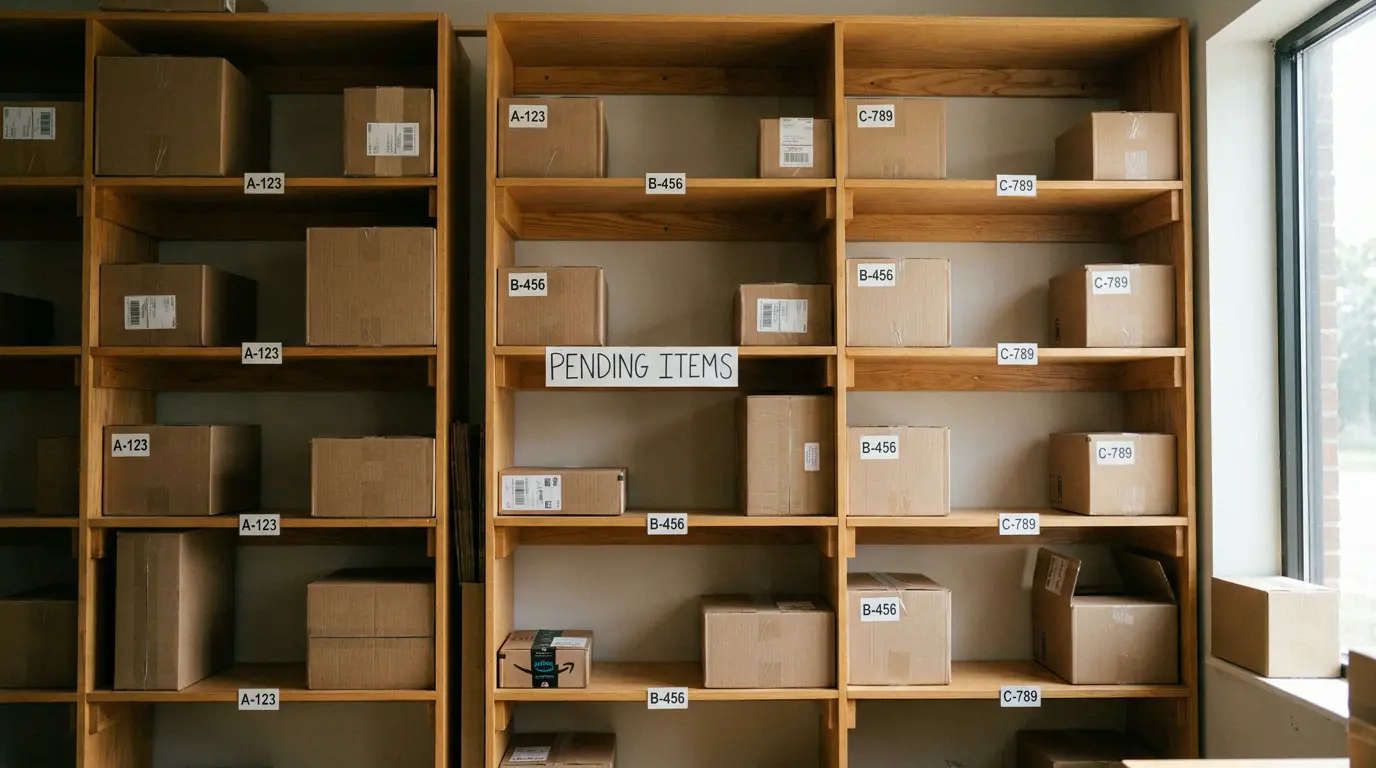
Ask an operations manager at a bus company what their reverse logistics problem is and nobody says returns management. They say the shelf at the back of the agency.
An unclaimed parcel generates cost in four directions at once. It occupies space that has no revenue attached. It creates custody risk, because the company is responsible for an item it cannot deliver. It consumes staff time in phone calls and explanations. And it eventually forces a decision that carries legal exposure: what can be done with goods that belong to someone who never appeared.
Most operators handle this with an informal rule and a good memory. A written policy with system support handles it far better. The elements that matter:
- A defined holding period, communicated to the sender at the moment of shipping and printed on the receipt.
- Automatic notifications at fixed intervals to both sender and recipient, with a record that they were sent.
- A documented escalation at the end of the period: return to origin at the sender’s cost, disposal, or transfer to a central holding point.
- Photographic record of condition at every custody change, which is what protects the company in a dispute.
None of this works when the parcel record lives in a notebook at each agency. It requires the same tracking identity for the item in both directions, which is the technical core of the problem.
Turning the return leg into revenue
Here is the part the warehouse guides never cover, because it only exists if you own the vehicles.
Bus operators run in both directions by definition. A coach that carries parcels from the capital to a regional city returns with hold space that is often half empty. That capacity is already paid for: the driver, the fuel and the trip exist regardless of what is inside the hold.
Reverse logistics is the natural cargo for that space. E-commerce sellers need a way to bring returns back from cities where no courier has a branch, and they will pay for it. The operator that can offer a return lane with tracking, proof of collection and a predictable schedule is selling capacity that currently travels empty.
Three conditions make that offer credible:
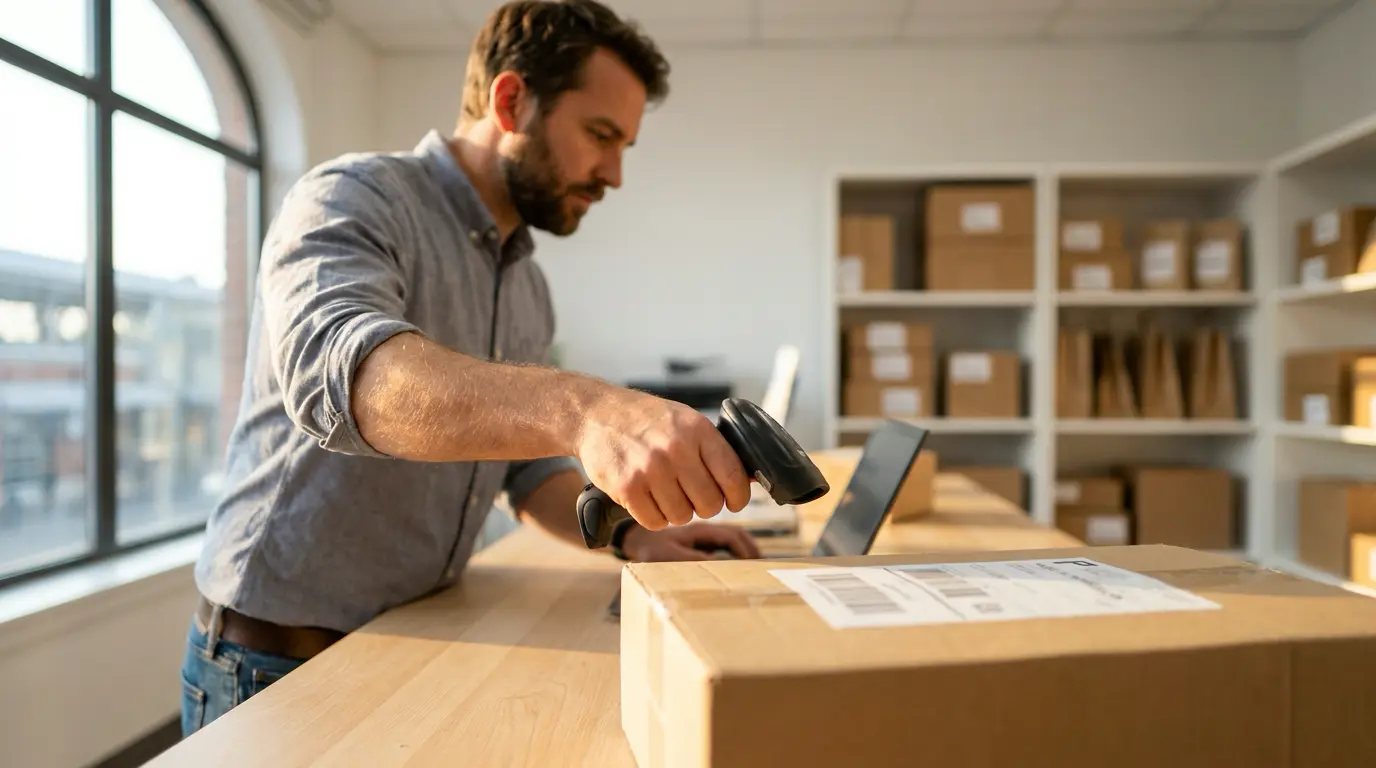
- Agencies work as drop off points with a scan at intake, so the seller knows the item is in the network before it moves.
- The return uses a tracking code tied to the original shipment, so both legs can be reconciled.
- Delivery at destination is confirmed with a signature or photo that the seller can access without calling anyone.
Without those three, what you have is not a service. It is a favor that generates complaints.

What the process looks like end to end
A functioning reverse process in a parcel network has six stages, and each one has a failure mode worth naming.
- Initiation. The return is requested and authorized, with a reason code. Failure mode: no reason recorded, so the company never learns why items come back.
- Intake. The item is received at an agency, inspected and photographed. Failure mode: intake without condition record, which converts every later dispute into the customer’s word against the counter clerk’s.
- Transport. The item travels on a scheduled service with its own tracking. Failure mode: the parcel rides informally, outside the manifest, and disappears from the system for a day.
- Hub processing. The item reaches a central point where disposition is decided. Failure mode: no defined owner for that decision, so items accumulate.
- Disposition. Resale, repair, return to sender or disposal. Failure mode: decisions made case by case with no rule, which produces inconsistent treatment of identical situations.
- Reporting. Volumes, reasons and costs are recorded by route and agency. Failure mode: no reporting at all, which is the usual state.
Metrics that tell you whether it is under control
Four numbers describe the health of a reverse operation, and none of them require sophisticated tooling:
- Unclaimed rate by agency. The percentage of parcels not collected within the holding period. Wide variation between agencies is almost always a notification problem, not a customer problem.
- Average dwell time of reverse items. How long a returned or unclaimed parcel sits before its disposition is resolved.
- Cost per reverse parcel. Handling, storage and transport of the second leg, compared against the revenue of the first.
- Reverse volume as a share of forward volume, by route. This is what tells you whether the return lane is worth selling as a product.
These numbers also change commercial conversations. An operator who can show a seller their historical return volume on a specific corridor is negotiating with evidence instead of promises, the same way operational dashboards change internal discussions about routes.
What your systems have to support
Reverse logistics fails at the software layer more often than at the operational one. The requirements are specific:
- Bidirectional tracking under one identity. The return has to reference the original shipment, not exist as an unrelated new record.
- Chain of custody with condition evidence at every handover, including photos taken at intake.
- Status and holding period rules that trigger notifications automatically rather than depending on someone remembering.
- Reporting by agency and route, because reverse problems are almost always concentrated in specific locations.
- Integration with the schedule, so a reverse parcel occupies a declared place on a specific service instead of traveling informally, the same discipline that makes geofencing events useful rather than decorative.
If your parcel system only knows how to move an item from A to B, every return becomes manual work and every unclaimed item becomes an argument.
QuatroBus parcel tracking handles both directions under the same record, with custody evidence at each step and reporting by agency, so returns stop being the shelf at the back of the office and start being a service you can charge for.