Tabla de contenidos
None of which means the software is a bad idea. It means the buying decision has to be made from your own operating reality rather than from a comparison table.
What this software actually does
Fleet maintenance software centralizes the work that keeps vehicles serviceable: scheduling preventive service, issuing and tracking work orders, recording inspections, managing parts inventory, and reporting on what all of it costs.
The core function is triggering service before failure. Instead of a mechanic remembering that unit 14 is due, the system generates a work order when the vehicle hits a mileage, engine-hour or calendar threshold you defined.
Everything else the category offers sits on top of that. If a platform does not handle scheduling and work orders well, no amount of dashboard polish compensates.
CMMS, fleet management, or fleet maintenance
Three overlapping labels, and vendors use them loosely. The distinctions matter when you are comparing quotes.
- CMMS. Computerized Maintenance Management System, the broad category. Originally built for stationary assets in factories and hospitals. Deep on work orders and parts, often light on anything vehicle-specific.
- Fleet management software. Usually centered on GPS tracking, routing and driver management, with maintenance as a secondary module.
- Fleet maintenance software. A CMMS adapted to vehicles, with mileage-based scheduling, inspection workflows and telematics feeds.
A platform can be excellent in one of these and thin in the others. Being clear about which problem you are solving keeps a demo from selling you the strongest part of a product you do not need.
Why guides written for trucking mislead a passenger operator
Almost every buyer’s guide in this category assumes a freight fleet. That assumption changes the math in ways that matter.
When a truck goes out of service, the cost is a missed load and a rescheduled delivery. When a coach goes out of service, the seats on it are already sold. You are covering a refund or a rebooking, pulling a unit off another itinerary, and absorbing a service failure that passengers remember.
Scheduling works differently too. A freight fleet can usually slide a service window by a day. A scheduled operator is running against a published timetable, so the software has to fit maintenance into the gaps a timetable leaves, not the other way around.
And the inspection requirements are their own category. Passenger vehicles carry equipment that freight vehicles do not: wheelchair lifts, passenger door mechanisms, emergency exits, onboard restrooms. A platform built for dry vans will need every one of those configured by hand.
The features that earn their place
Strip away the feature lists and a short set does the actual work:
- Multi-trigger PM scheduling. Mileage, engine hours and calendar time, running at the same time on the same asset. Engine hours matter more than odometer readings on vehicles that idle at terminals.
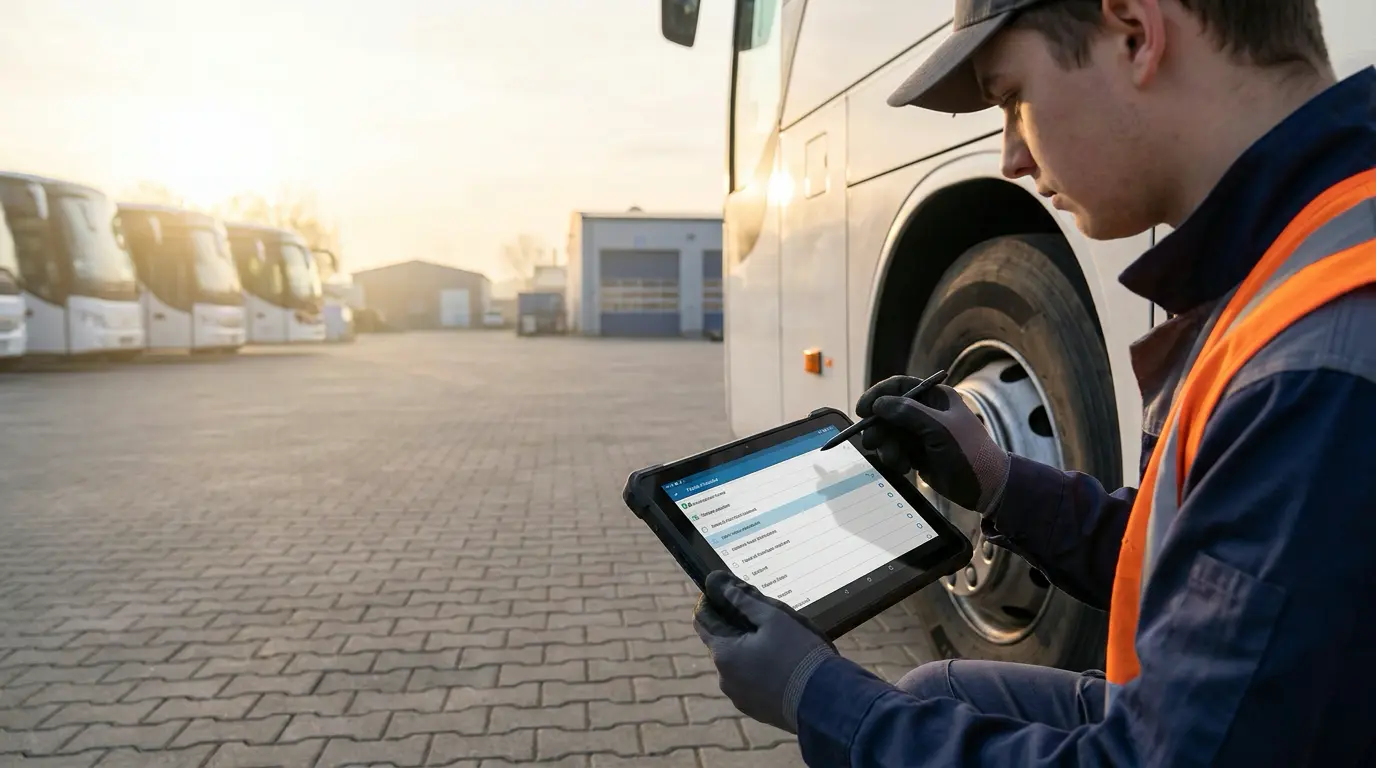
- Digital inspections that work offline. Drivers do walkarounds in yards and roadside stops with no reliable signal. If the app needs connectivity to record a defect, the defect gets recorded on paper or not at all.
- Work orders linked to parts. A work order that does not decrement inventory leaves you discovering a missing part when the bus is already on the lift.
- Cost per unit, not just totals. Cost per mile or per hour by vehicle is what tells you whether a coach is worth keeping. A single fleet-wide spend number tells you nothing actionable.
- Complete service history per asset. Both for resale value and for the moment an inspector asks what was done and when.
Anything beyond that list is worth having only if someone on your team will use it. Predictive analytics built on telemetry is real and increasingly common, and AI in transportation is pushing it further, but it requires sensor-equipped units and someone reading the output daily. For most operators the honest starting point is a preventive plan that actually gets followed.
What it costs
Pricing in this category is per vehicle per month, and published rates span a wide range. Most platforms fall between $5 and $30 per vehicle monthly, with entry tiers lower and enterprise deployments running well above $50. Bus-specific products are often quoted annually instead, with basic tiers around $200 to $300 per vehicle per year.
The subscription is rarely the whole number. Ask specifically about implementation and data migration fees, per-user charges on top of per-vehicle pricing, telematics integration costs, training, and what support actually costs beyond a help center.
Run the comparison against your own cost baseline rather than against a competitor’s price. The same discipline that should govern how you price charter trips applies here: a subscription is cheap or expensive relative to what a breakdown costs you, and only your numbers answer that.
Standalone system or part of your operations platform
This is the decision that gets the least attention and causes the most friction later.
A dedicated maintenance platform will almost always have deeper maintenance features than a maintenance module inside a broader system. That is a real advantage and worth weighing honestly.
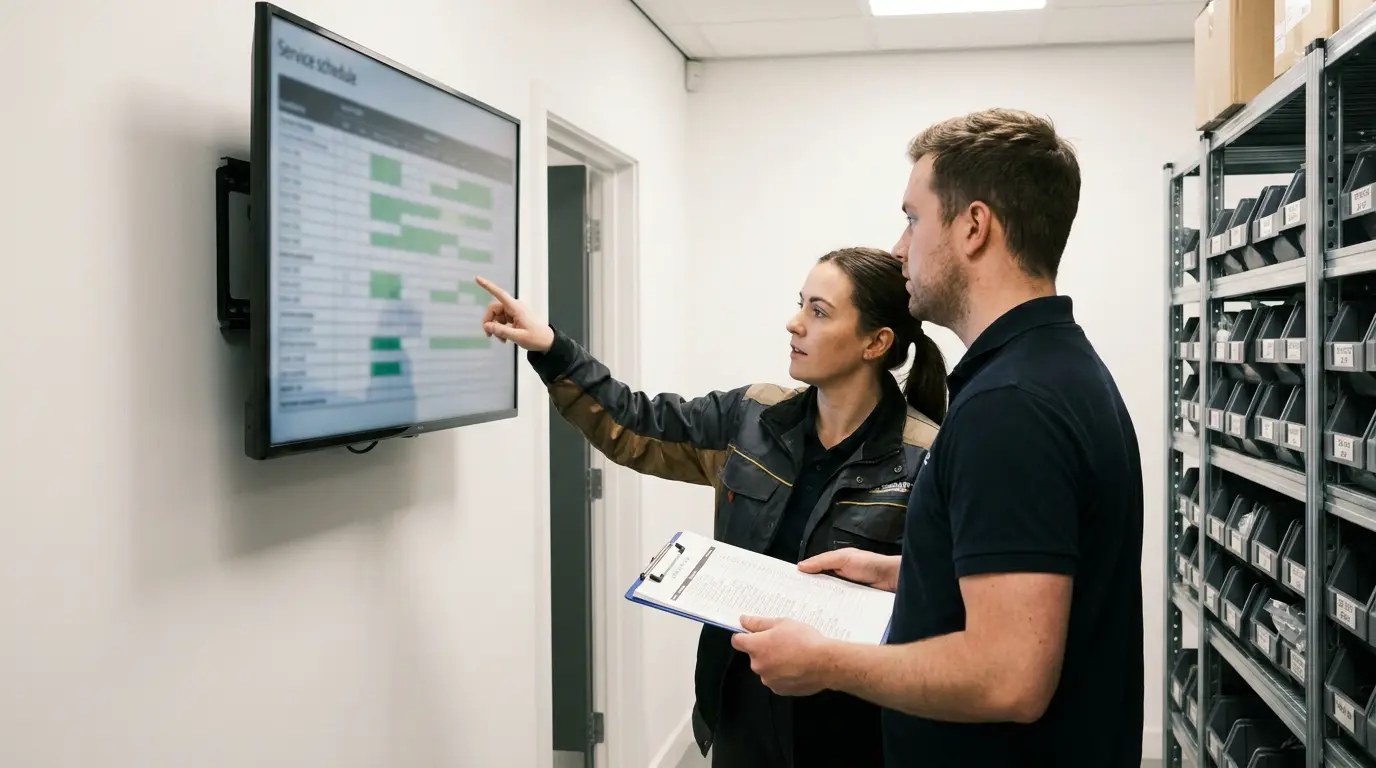
What it will not have is your schedule. A standalone system knows unit 14 is due for service in 800 miles. It does not know that unit 14 has 42 seats sold on Friday and is the only accessible vehicle assigned to that route. Someone has to hold both facts and reconcile them, and in most operations that someone is a person moving information between two screens.
The question to answer before any demo is whether your maintenance problem is depth of maintenance functionality or coordination between maintenance and operations. Those point to different products, and getting it backwards is expensive.
Implementation is where these fail
Cloud platforms typically go live in one to two weeks. Enterprise deployments with hardware and integrations run months. But the timeline is not usually what sinks a rollout.
Three things do. Historical data that never gets migrated, leaving you with a system that knows nothing about vehicles it has not seen serviced. Mechanics who were not consulted and keep using the whiteboard. And PM schedules copied from a manufacturer default instead of set against how your routes actually wear the vehicle.
The mechanics point deserves emphasis. Maintenance software is only as good as the technician entering the work order, and adoption at the shop floor is the single best predictor of whether the investment pays off. The same pattern shows up with driver behavior monitoring: the technology works, but only where the people using it were part of the decision.
What to ask on the demo call
Vendors control the demo. These questions take it back:
- Show me a passenger vehicle asset profile as it ships, before customization.
- How does the mobile inspection app behave with no connectivity?
- Can one asset run mileage, engine-hour and calendar triggers simultaneously?
- What does migrating three years of service history cost and how long does it take?
- Which telematics providers do you integrate with natively, and which need custom work?
- Can I export my full data set if I leave, and in what format?
- How many customers do you have at my fleet size, and can I speak with one?
That last one filters more effectively than any feature comparison. A vendor whose customer base is 500-vehicle trucking fleets will happily sell to a 20-coach operation, but the roadmap and the support model were built for someone else.
Does your maintenance schedule know which units have seats sold this weekend? The QuatroBus fleet module keeps service intervals, vehicle status and route assignments in the same system, so a unit coming due for service is visible to whoever builds the schedule.