Tabla de contenidos
Fleet management is how organizations keep their vehicles running efficiently, safely, and within budget. Whether a company hauls freight across a country or carries passengers between cities, the same core principles apply. This guide breaks down what fleet management is, what a fleet management system does, its core components and benefits, and how it extends to passenger transport.
What is fleet management?
Fleet management is the process of overseeing, maintaining, and optimizing an organization’s vehicles throughout their entire lifecycle. It covers vehicle acquisition and disposal, maintenance, driver management, fuel, compliance, and performance, all with one goal: keeping the maximum number of vehicles operational at the lowest possible cost.
In practice, it is far more than keeping vehicles running. It is strategic asset management that connects people, processes, and data, so leaders can make informed decisions about maintenance, utilization, budgeting, and when to replace a vehicle. A fleet can be anything from delivery vans to freight trucks to a fleet of interprovincial buses.
What does a fleet management system do?
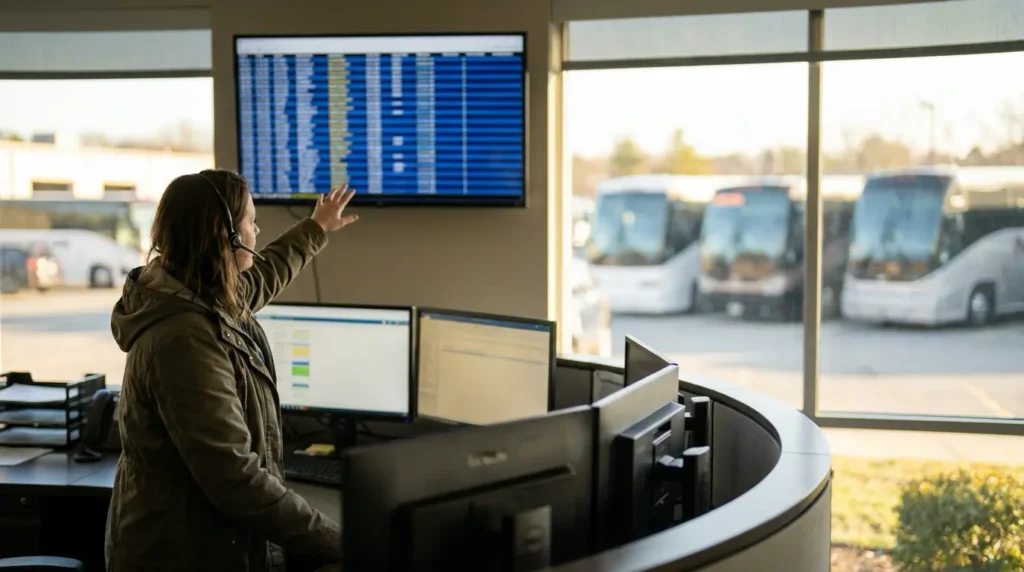
A fleet management system (FMS) is the software, usually paired with in-vehicle hardware, that makes modern fleet management possible. It consists of two connected parts: a device installed in each vehicle that collects data, and a software platform that processes and displays it on a dashboard.
The in-vehicle hardware, typically a GPS unit or an OBD telematics device, gathers real-time information like location, speed, mileage, fuel consumption, and engine diagnostics. The software turns that raw stream into something a fleet manager can act on: alerts, reports, and a live view of the entire fleet. This is what lets one person stay on top of vehicles spread across an entire region.

The core components of fleet management
Modern fleet management spans several interconnected areas. A weakness in any one of them affects uptime, safety, and cost. These are the pillars:
- Vehicle tracking: real-time GPS and telematics show where every vehicle is and how it is being used, the foundation of visibility and security.
- Maintenance management: scheduling preventive and predictive maintenance based on real mileage or engine hours, so failures are planned for instead of suffered on the road.
- Driver management: monitoring driving behavior to improve safety and reduce wear. Tracking habits like harsh braking or speeding is the basis of any driver behavior monitoring program.
- Fuel management: tracking consumption to control what is often the single largest operating expense, around 60% of a typical fleet’s operating budget.
- Compliance: keeping documentation, inspections, and licensing in order to avoid penalties and keep vehicles legally on the road.
- Asset lifecycle: deciding when to acquire, replace, or retire vehicles based on total cost of ownership.
Key benefits of fleet management
The value of fleet management shows up directly in cost, safety, and reliability. The most commonly cited benefits are:
- Lower costs. Optimized routes, controlled fuel use, and preventive maintenance reduce both daily spend and expensive breakdowns.
- Less downtime. Scheduled maintenance keeps more vehicles operational, and every vehicle off the road is lost revenue.
- Improved safety. Monitoring driver behavior and vehicle condition reduces accidents and the costs that come with them.
- Regulatory compliance. Staying ahead of inspections and document renewals avoids fines and keeps the fleet legal.
- Better decisions. With performance data centralized, managers run the fleet on evidence instead of guesswork.

Fleet management vs. a transport management system (TMS)
These two terms often get used interchangeably, but they solve different problems. Fleet management focuses on the vehicles themselves: their condition, drivers, maintenance, and lifecycle. A transport management system (TMS) focuses on the movement of what those vehicles carry: planning, executing, and optimizing shipments or trips.
Think of it this way: fleet management keeps the vehicles healthy and ready, while a TMS plans and coordinates the work they do. In many operations the two overlap and integrate, especially in passenger transport, where managing the buses and managing the routes, tickets, and parcels are part of the same daily reality.
Fleet management for passenger transport
Most fleet management content assumes you are managing delivery vans or freight trucks. But a company that needs to manage a vehicle fleet of passenger buses faces the same challenges, often with higher stakes, because the cargo is people.
An interprovincial bus operator has to keep every coach maintained, track each vehicle on long routes, monitor driver behavior over hundreds of kilometers, and stay compliant with transport authorities, all while keeping units on the road to protect revenue. The principles are identical to commercial fleet management; what changes is that vehicle availability translates directly into seats sold and trips completed. For these operators, fleet management is not a back-office function: it is the difference between a bus that earns and a bus that sits.
Frequently asked questions
What does a fleet manager do?
A fleet manager oversees the vehicles, drivers, maintenance, costs, and compliance of a fleet. The role combines scheduling, data analysis, and decision-making to keep the fleet efficient, safe, and within budget.
What is the difference between fleet management and telematics?
Telematics is the technology that collects vehicle data, like GPS location and engine diagnostics. Fleet management is the broader discipline that uses that data, along with maintenance, compliance, and cost processes, to run the fleet.
Does a small fleet need fleet management software?
Increasingly, yes. Cloud-based systems have made the technology affordable for smaller operators, and even a handful of vehicles generates enough maintenance and cost data to justify centralizing it.
Is fleet management only for trucks and delivery vehicles?
No. While most tools were built for commercial freight, the same principles apply to passenger fleets such as bus and coach operators, who manage maintenance, tracking, and compliance the same way.
Fleet management is what separates a company that reacts to breakdowns from one that prevents them. Whether the fleet carries freight or passengers, knowing the condition, location, and cost of every vehicle at all times is what keeps the operation profitable. If you still track maintenance and document renewals on spreadsheets, centralizing your fleet in a single system is the step that brings real control. See how the QuatroBus platform helps passenger transport operators manage their fleet alongside the rest of the operation.