Tabla de contenidos
- What is a bill of lading
- The three jobs a bill of lading does at once
- What federal rules require on the document
- Straight versus order bills of lading
- Where a passenger carrier actually runs into this
- Passenger baggage is not freight
- The mistakes that turn a document into a claim
- Electronic bills of lading
- What it takes to issue one properly
That signature carries legal weight, and passenger carriers run into it more often than they expect.
What is a bill of lading
A bill of lading is a legal document issued by a carrier to a shipper that lists the goods being transported, where they came from, where they are going, and the terms under which they move. It is commonly abbreviated as BOL or B/L. The name comes from the verb to lade, meaning to load, because the document began as a receipt for cargo loaded onto ships.
In the United States, bills of lading are governed by the Pomerene Act of 1916, now codified in federal law, along with the Federal Motor Carrier Safety Administration rules that apply to motor carriers.
The three jobs a bill of lading does at once
Most of the confusion around this document comes from the fact that it is doing three separate things simultaneously. Separating them makes the rest of the topic much easier to follow.
- A receipt. It confirms the carrier took possession of the goods, in a stated quantity and condition, at a stated time.
- Evidence of the contract of carriage. It records the terms the shipper and carrier agreed to. The BOL is not the contract itself, only documentation that one exists.
- A document of title. Depending on the type, it can determine who has the legal right to claim the goods at the destination.
That third function is the one that surprises people. In certain forms, the piece of paper effectively is the cargo, in the sense that whoever holds it properly endorsed can claim what is inside the trailer.
What federal rules require on the document
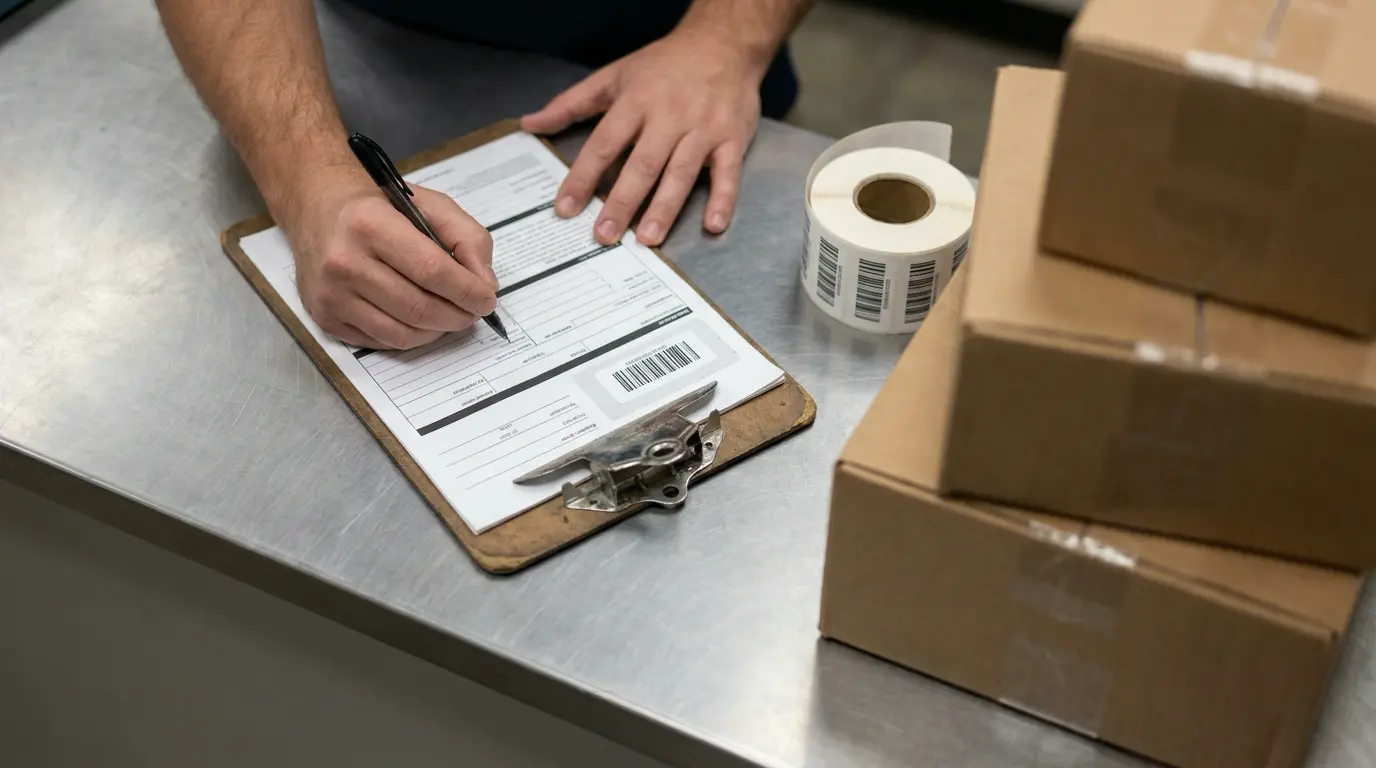
For general freight moving in interstate commerce, 49 CFR 373.101 sets the baseline that a for-hire, non-exempt motor carrier has to include:
- Names of the consignor and the consignee.
- Origin and destination points.
- Number of packages.
- Description of the freight.
- Weight, volume, or measurement, if it affects how the shipment is rated.
Household goods moves are a separate regime with a much longer list under 49 CFR 375.505, and hazardous materials add their own shipping paper requirements on top of everything else. In practice most commercial bills of lading also carry a National Motor Freight Classification code, which sets the freight class and therefore the rate.
The NMFC code deserves attention because getting it wrong is one of the most expensive routine errors in freight. Carriers reweigh and reclassify, then reissue the invoice at the corrected rate.
Straight versus order bills of lading
This distinction decides who can legally take the goods, and it is the single most useful thing to understand about the document.
A straight bill of lading is non-negotiable. It names one specific consignee and the freight is released only to that party. Federal rules require the words nonnegotiable or not negotiable on the face of the document. This is the standard form for domestic trucking and for anything already paid for.
An order bill of lading is negotiable. It consigns goods to the order of a named party, and title can be transferred to a third party by endorsement on the back. Under 49 CFR 1035.1, it has to be titled Uniform Order Bill of Lading and marked Negotiable on the front. Carriers may only release the cargo to whoever presents the original document.
The practical consequence is stark. Release freight moving under an order bill to the wrong party and the carrier is exposed for the value of the goods, no matter how reasonable the mistake looked at the dock.
Where a passenger carrier actually runs into this
Here is the part the freight-focused guides skip entirely. A motorcoach company is not a freight hauler, but there are three situations where a bill of lading lands on your desk anyway.
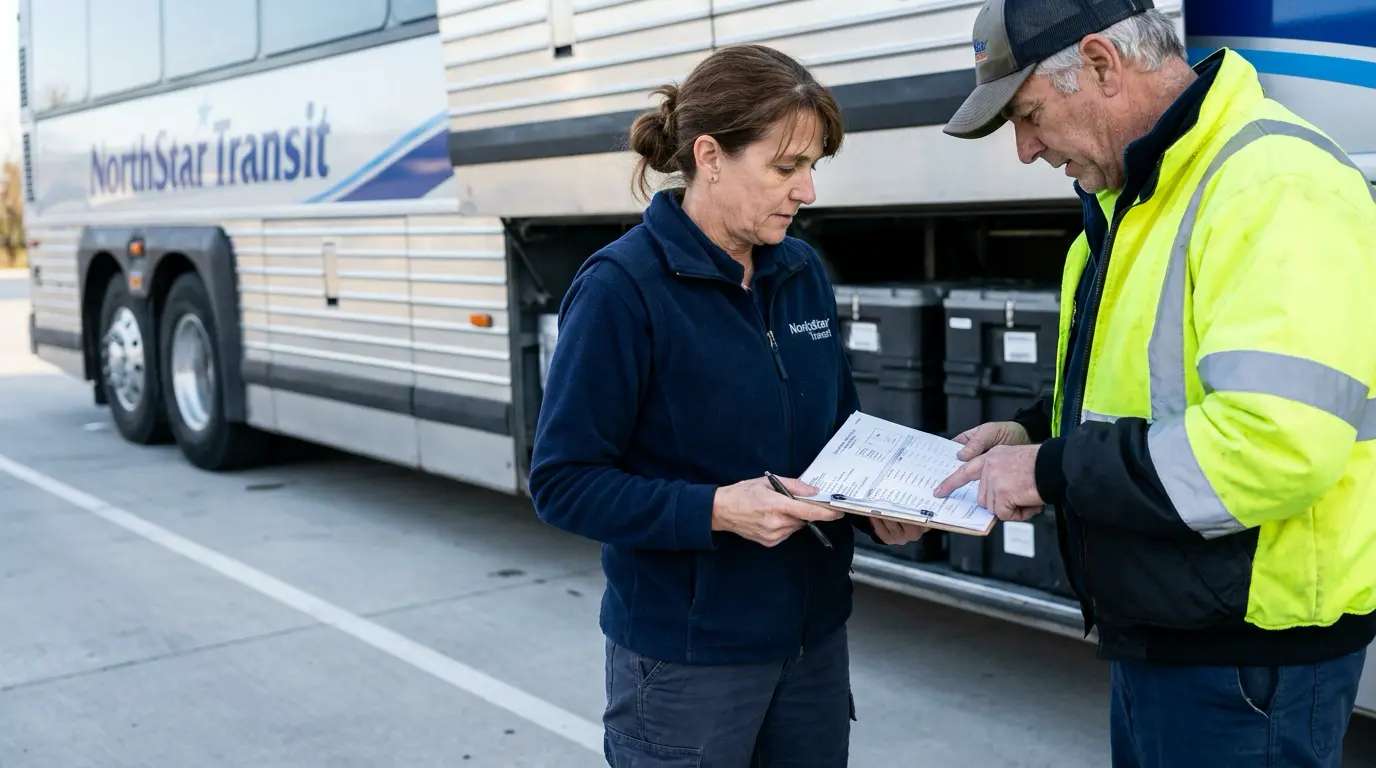
Package express service. Some operators sell space in the baggage bay for parcels moving between the cities they already serve. That is transportation of property for compensation, and it is a different regulatory category from hauling passengers. It changes what operating authority you need and what documentation you have to issue.
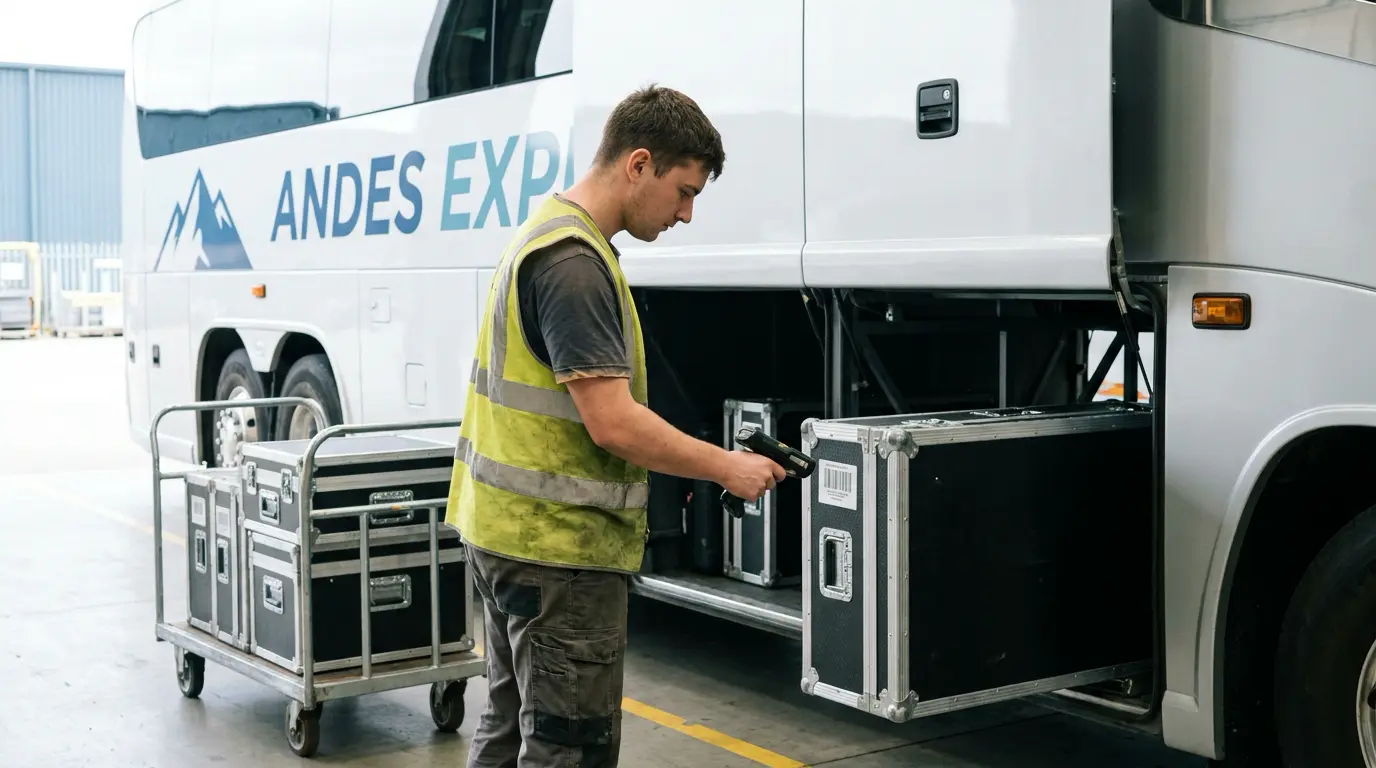
Charter work involving equipment. Sports teams, touring bands, trade show exhibitors and school groups all travel with cargo. When the client treats that cargo as a shipment and hands over a BOL, the operator is being asked to accept carrier liability for it. Pricing for that risk is separate from what a charter bus costs to run.
Signing as a receiver. Parts, tires and supplies arriving at your own maintenance facility come with bills of lading. Whoever signs for them is documenting the condition in which they arrived, which matters when something shows up damaged.
Passenger baggage is not freight
The line between the two matters, because operators sometimes assume they are the same paperwork problem.
Luggage traveling with a ticketed passenger moves under the passenger contract, typically the terms printed on or referenced by the ticket. There is no bill of lading and no consignee, because the passenger is present and retains custody of their own property.
A parcel handed over at a counter by one person, to be picked up in another city by a different person, is something else entirely. There is a consignor, a consignee, and a carrier holding goods on behalf of both. That is the profile of a shipment, and it is where documentation obligations begin.
Operators who blur the two end up running a package business on baggage-claim paperwork, which works until the first real loss.
The mistakes that turn a document into a claim
Disputes over cargo rarely start at the moment of loss. They start with how the bill of lading was filled out.
- Not noting damage at delivery. Exceptions have to be written on the document at the time of delivery. A clean signature on visibly damaged freight makes the claim far harder to pursue.
- Vague descriptions. Miscellaneous equipment is not a description. It leaves the value of the cargo undefined and the classification open to challenge.
- Ignoring the SLC notation. Shipper Load and Count means the shipper loaded and counted without the driver verifying. Common on sealed trailers, and it means the carrier can contest a shortage claim on the grounds that nobody confirmed the count.
- Piece counts that do not match. The number on the document is what the carrier is accountable for delivering, regardless of what actually went into the bay.
Carrier liability for loss or damage under a bill of lading is set by the Carmack Amendment, and the terms recorded on the document are the starting point for any dispute.
Electronic bills of lading
Paper is no longer the requirement it once was. Federal rules explicitly allow bills of lading to be documented on paper or issued electronically, and the E-SIGN Act gives electronic signatures the same legal standing as ink.
For an operator handling parcels across a route network, that matters for a practical reason: an electronic BOL is generated once and visible at every stop, instead of a carbon copy that lives in one driver’s clipboard. The document and the tracking record become the same object.
What it takes to issue one properly
Issuing a compliant bill of lading is less about the form and more about whether your operation can produce the information the form asks for.
You need consignor and consignee details captured at the counter, a real description and piece count recorded at acceptance, a condition note at both ends, and a retention system, since carriers are required to keep these records. If any of that lives in a spiral notebook at one terminal, the document is only as reliable as that notebook.
One caveat worth stating plainly: the rules summarized here are the general framework for interstate general freight. Household goods, hazardous materials, and intrastate moves each carry additional requirements, and state agencies add their own. Before launching a service that involves issuing bills of lading, confirm the specifics with transportation counsel.
Thinking about moving parcels alongside passengers on routes you already run? The QuatroBus logistics module records each shipment from counter acceptance through delivery, so consignee details, piece counts and condition notes exist as data rather than as paperwork in a driver’s folder.