Tabla de contenidos
A box can travel 400 miles overnight in the luggage bay of a motorcoach, cross three counties without a scratch and arrive at the destination terminal before sunrise. Then it waits. The recipient works until six, the terminal counter closes at seven, and nobody else is going to carry the package the last eight miles to a front door. Long-haul transport has never been cheaper or faster than it is today. The final stretch is where deliveries stall, costs pile up and customers lose patience.
That final stretch has a name, and understanding it matters for any operator that moves parcels, including bus companies that carry package express alongside passengers.
What is last-mile delivery?
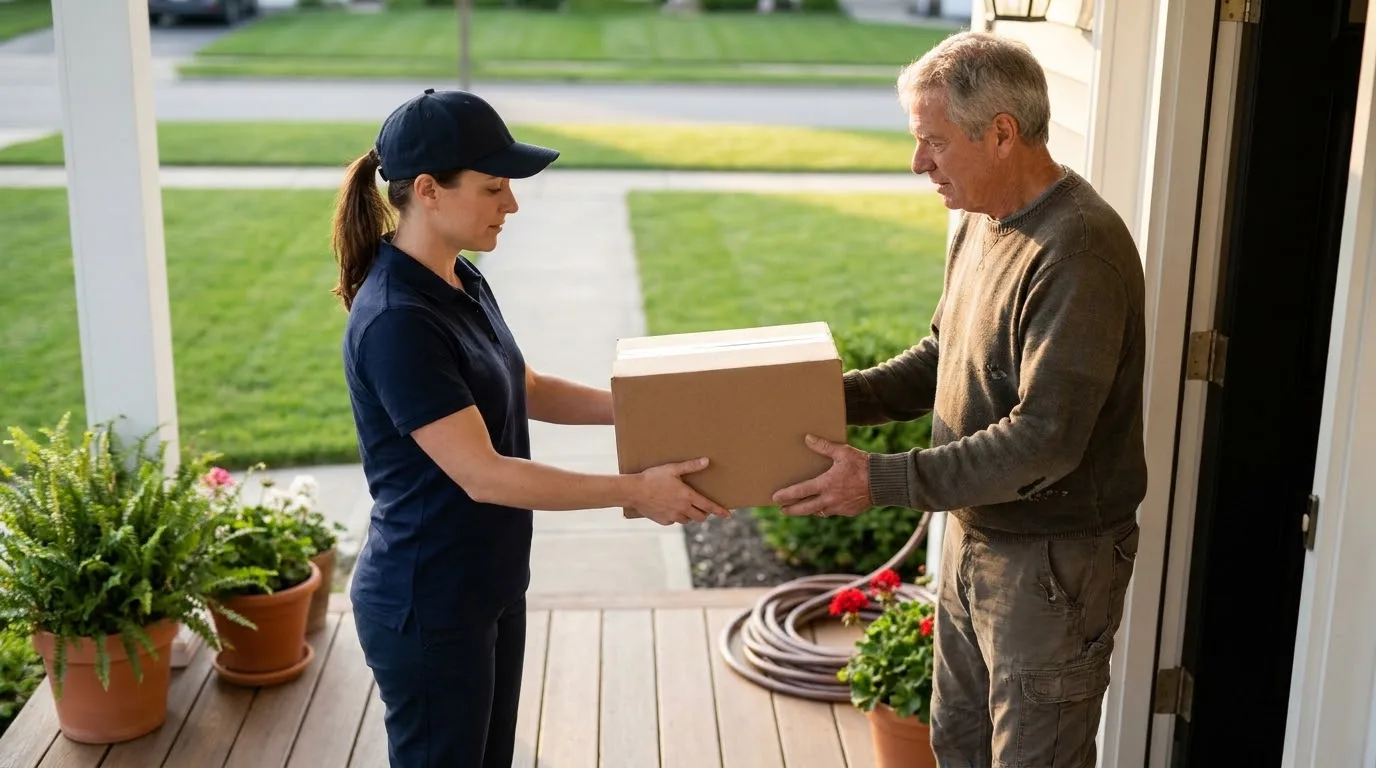
Last-mile delivery is the final leg of a shipment’s journey, from the last hub or terminal where it is sorted to the place where the recipient takes it: a home, a business, a locker or a pickup counter. It is the shortest part of the route and usually the most expensive, because each stop serves a single recipient instead of a full truck or bus.
Logistics people usually describe a shipment in three legs. The first mile moves goods from the shipper to the first hub. The middle mile is the long-haul run between hubs or cities, where volume is consolidated and cost per unit is lowest. The last mile breaks that volume apart again into individual deliveries. A related concept, the flow of goods coming back from the customer, is covered in our guide to reverse logistics.
Why the last mile costs so much
The economics flip at the last hub. On the highway, one vehicle carries hundreds of parcels and the cost of fuel and labor is spread across all of them. After the hub, a driver may spend ten minutes finding parking for one box. In a FarEye survey of 300 retail and logistics leaders, last-mile delivery accounted for 53% of overall shipping costs. Respondents named four main cost drivers:
- Fuel, cited by 59%, because stop-and-go routes burn far more per parcel than highway miles.
- Address location, cited by 39%: rural addresses, gated buildings and incomplete details add time to every stop.
- Labor, cited by 36%, since drivers are paid by the hour while each stop moves a single package.
- Failed first delivery, cited by 34%. Nobody home means a second trip, a held package or a return.
The last item is the one operators underestimate most. A failed attempt does not just add a trip. It turns a delivery into a storage problem, a customer service call and, often, a complaint.
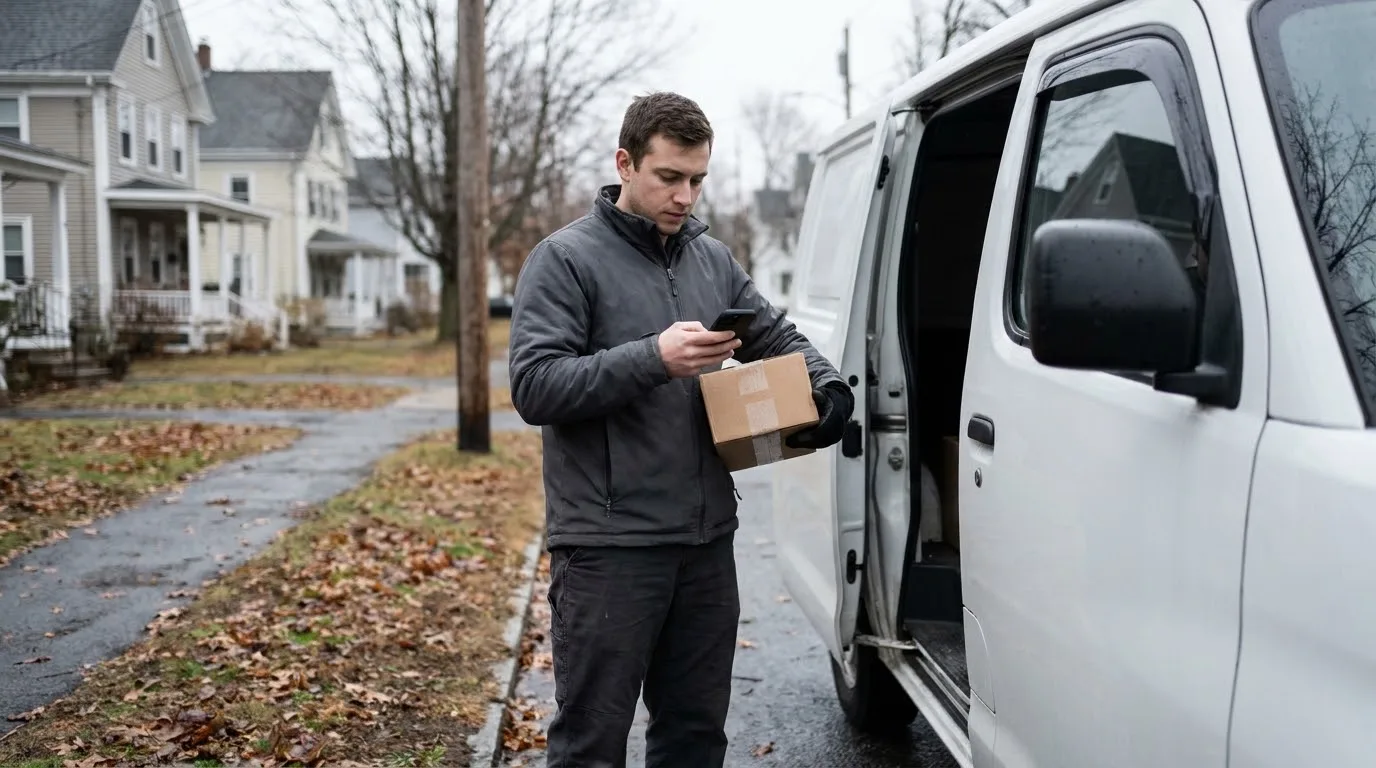
The main last-mile delivery models
There is no single way to cover the last mile. Each model shifts cost and effort between the carrier and the recipient.
| Model | How it works | Trade-off |
|---|---|---|
| Door-to-door delivery | A driver brings the parcel to the recipient’s address | Best experience, highest cost per stop, exposed to failed attempts |
| Pickup point or locker | Parcels go to a shared location the recipient visits | Much cheaper per parcel, depends on convenient locations |
| Hold at terminal | The parcel waits at the destination station or counter | Lowest cost for the carrier, all the effort shifts to the recipient |
| Partner courier | A local delivery company takes the parcel from the hub to the door | Extends reach without a fleet, adds a handoff and less control |
Most operators end up combining models: door delivery in dense areas, pickup points or hold-at-terminal in rural ones, and partners where volume does not justify their own vehicles.
Where bus operators fit in the last mile
Intercity bus companies have carried parcels for decades. Package express services ride in the luggage bays of scheduled coaches, which means the middle mile is already paid for by the passenger trip. That is a real cost advantage, and in many small towns a scheduled coach is the fastest way to move a box between cities on the same day.
The weakness is almost always the last mile. Most bus parcel services are terminal-to-terminal: the shipper drops the package at one counter and the recipient collects it at another. That works when both ends live near a station. It fails when the recipient is 20 miles away, works during counter hours or does not know the package has arrived.
The operators that grow this line of business tend to solve three things before buying vans:
- Arrival notifications. A text message when the coach unloads the package cuts the time it sits at the counter, and with it the storage problem.
- Extended pickup windows. Counter hours that match arrival times of evening coaches, or a secure after-hours pickup option.
- A partner for the final miles. A local courier that picks up at the terminal on a fixed schedule turns a terminal-to-terminal service into a door-to-door one without a new fleet.
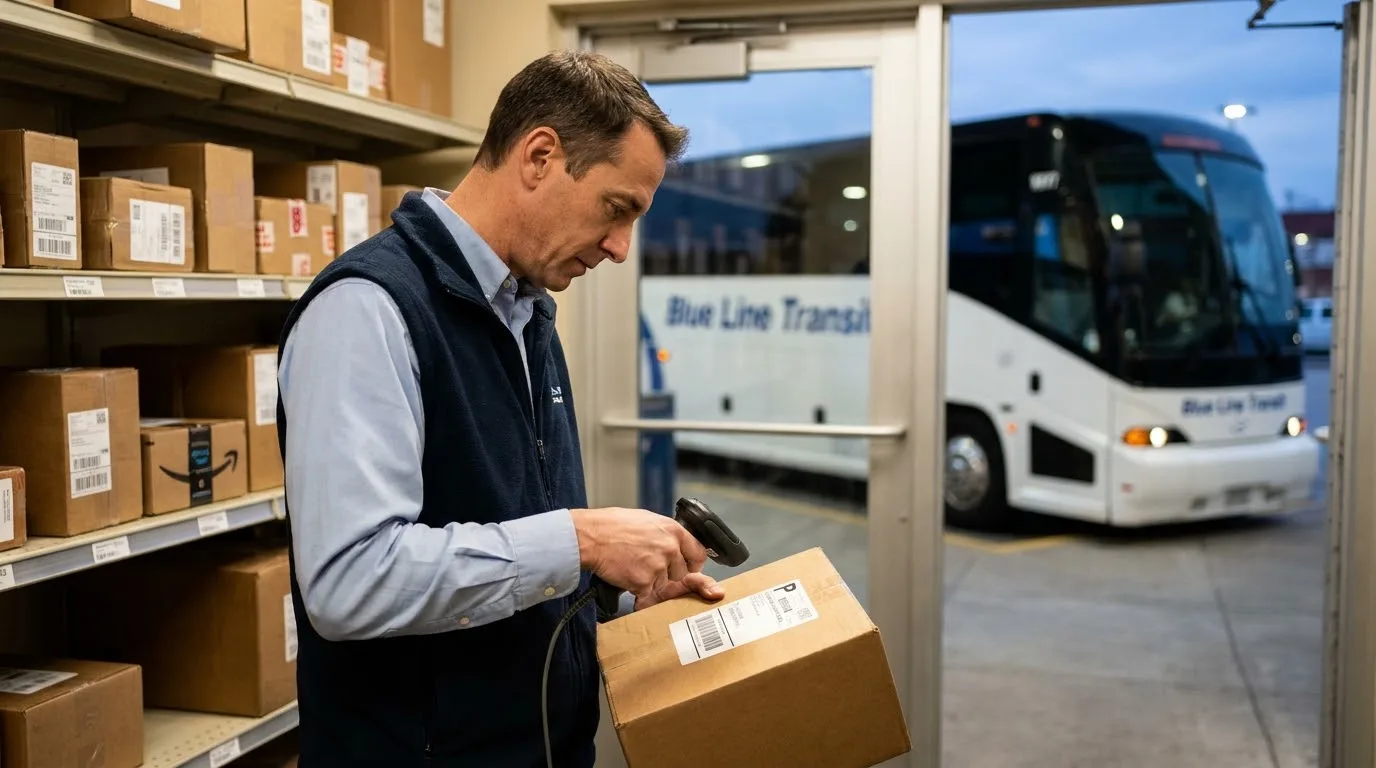
None of the three works without visibility. A partner courier cannot plan a route around packages it cannot see, and a customer cannot be notified about a parcel that was never scanned off the coach. Scanning at every handoff, from the counter to the luggage bay to the destination shelf, is what makes the last mile manageable for a bus operator, in the same way that route optimization makes it manageable for a delivery fleet.
How to measure last-mile performance
Three numbers capture most of what matters. First-attempt delivery rate shows how often the parcel reaches the recipient on the first try. Dwell time at the destination terminal shows how long packages sit before pickup, which is the most useful last-mile number for a hold-at-terminal service. Cost per delivered parcel ties the operation back to price. Tracked by route and by destination, they show which towns need a pickup partner and which ones work fine as they are. They also belong next to the broader transportation KPIs a bus company already follows.
If your parcel service still runs on handwritten waybills and phone calls to the destination counter, the last mile is where it shows. The QuatroBus transport management platform scans each package from drop-off to pickup, notifies recipients when their parcel arrives and gives every terminal the same view of what is waiting on its shelves.