Tabla de contenidos
- What is a coach bus?
- How a coach bus differs from a regular (transit) bus
- Coach bus vs charter bus vs motorcoach: are they the same?
- Key features of a modern coach bus
- Most common uses of coach buses
- Regulations and licensing for coach bus operations
- Where coach buses fit among other types of passenger buses
- Frequently asked questions
This article explains the definition, distinguishes the three confusingly similar terms, walks through the typical features and regulations, and shows where the coach bus fits among all the other passenger bus types you might encounter.
What is a coach bus?
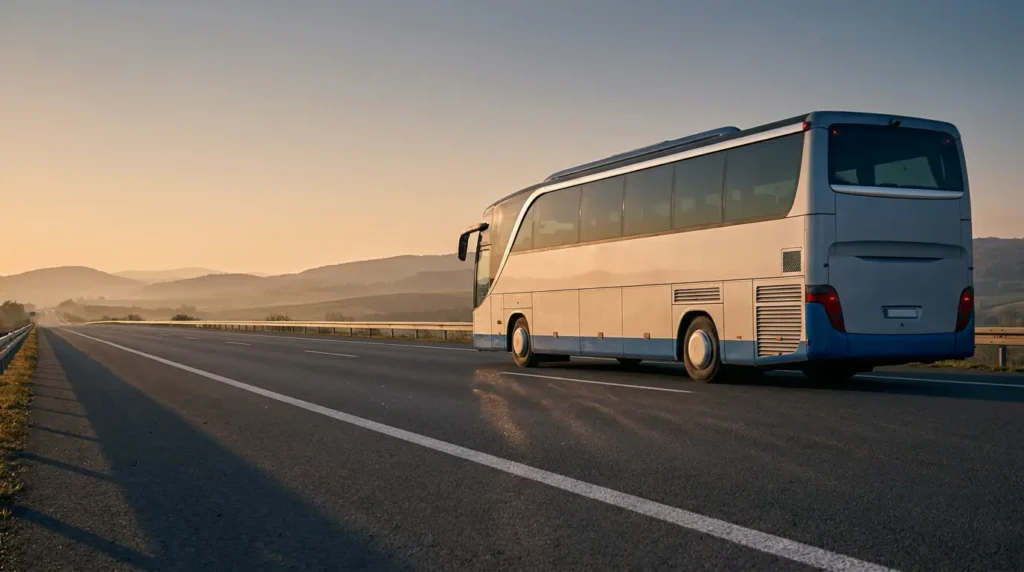
A coach bus is a high-floor passenger vehicle built for long-distance travel, with reclining forward-facing seats, a luggage compartment beneath the passenger deck, and amenities such as climate control, restrooms, Wi-Fi, and panoramic windows. It typically seats 30 to 61 passengers and is used for intercity service, private group charter, tourism, and corporate transport.
The term comes from “Kocs”, a Hungarian town where 15th-century wheelwrights built the first horse-drawn vehicle with steel-spring suspension. The “cart of Kocs” became the model for European mail coaches in the 1600s, and the name stuck through the transition to motorized vehicles. In modern usage, the United States Federal Motor Carrier Safety Administration (FMCSA) officially designates these vehicles as motorcoaches; Europe classifies them as M2 or M3 vehicles under UNECE Regulation 107; and in everyday English they are most commonly called coach buses.
How a coach bus differs from a regular (transit) bus
A transit bus is the city bus most people ride to work or school: low floor, multiple wide doors, durable bench-style seats, and standing room with handrails. It is built for short urban trips, frequent stops, and high passenger turnover. Comfort takes a back seat to capacity and durability.
A coach bus is built for the opposite use case. The differences fall into five clear categories:
- Floor design. Coach buses are high-floor, with the passenger deck elevated above a luggage compartment. Transit buses are typically low-floor for easy boarding.
- Seating. Coach buses have forward-facing reclining seats with high backs, armrests, and individual reading lights. Transit buses use bench-style seats arranged for capacity, often with no padding.
- Distance and stops. Coach buses cover hundreds of miles with few or no stops. Transit buses operate on fixed routes with stops every few blocks.
- Doors. Most coach buses have a single front door for controlled boarding. Transit buses have multiple doors to speed entry and exit.
- Amenities. Coach buses often include onboard restrooms, Wi-Fi, USB outlets, climate control, and overhead storage. Transit buses include little beyond seats, handrails, and basic ventilation.
A coach bus is built for the journey itself. A transit bus is built to move as many people as possible across a metropolitan area as efficiently as possible.
Coach bus vs charter bus vs motorcoach: are they the same?
These three terms are commonly used as if they meant the same thing, and in casual conversation they often do. But the distinctions matter when you are booking, regulating, or operating one.
- Coach bus is the generic name for the vehicle category. It describes a high-floor, long-distance bus regardless of how it is being used.
- Motorcoach is the official US designation, defined by the FMCSA as a bus designed with an elevated passenger deck located over a baggage compartment. It is the same vehicle as a coach bus; the term is more common in regulatory and industry contexts.
- Charter bus describes a use, not a vehicle. To “charter” a bus means to rent the entire vehicle for a private group, route, and schedule. A coach bus is the vehicle most often used for charter trips, but smaller minibuses and shuttles can also be chartered. So all chartered coach buses are charter buses, but not all charter buses are coach buses.
The cleanest way to think about it: coach bus and motorcoach refer to the vehicle; charter bus refers to the service.
Key features of a modern coach bus
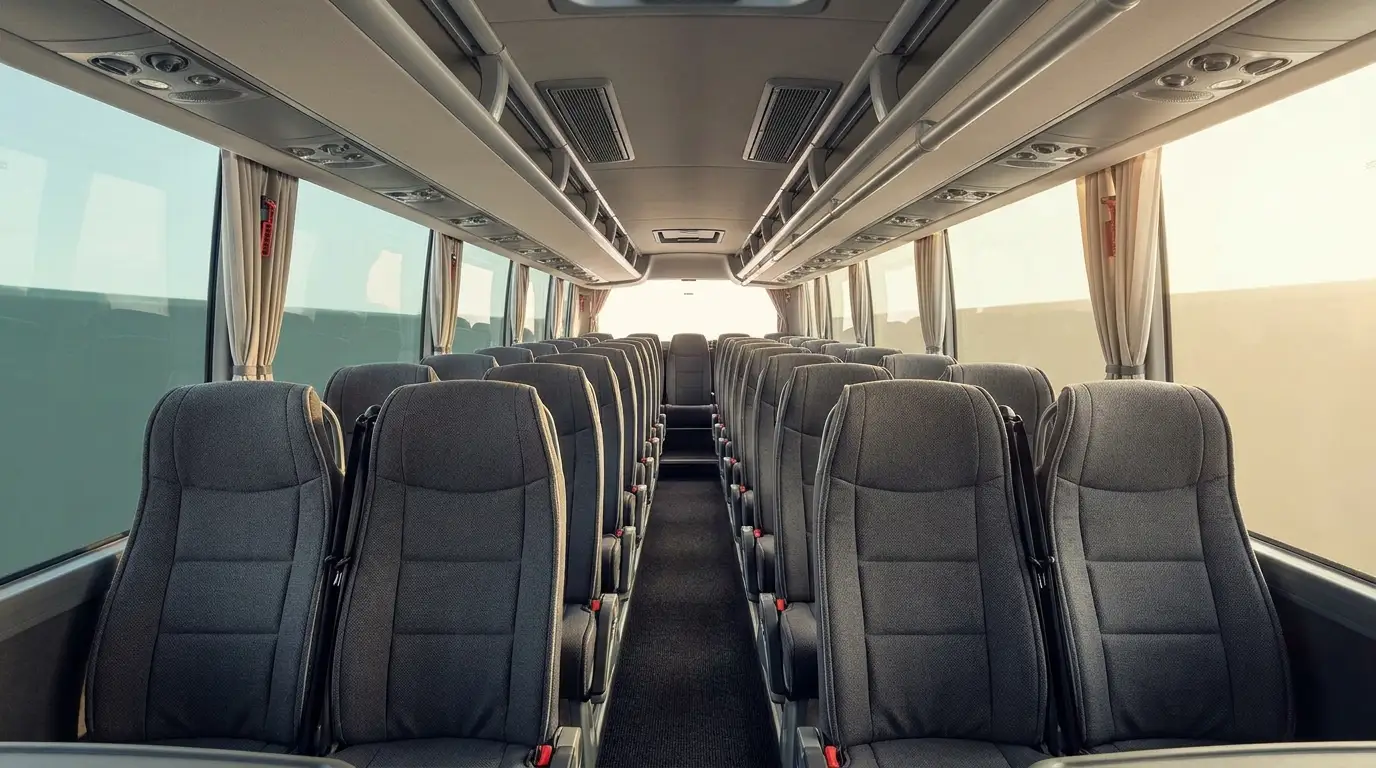
The features that distinguish a coach bus from other passenger vehicles are tied directly to its purpose: keeping a group of adults comfortable for several hours on a highway.
- Elevated passenger deck. The raised floor sits above an external luggage compartment that opens from the side of the vehicle.
- Reclining high-back seats. Typically arranged in a 2-2 layout with a center aisle. Premium coaches use 2-1 or 1-1 configurations for extra space.
- Generous legroom. 36 to 38 inches of seat pitch is standard, well above transit bus norms.
- Onboard restroom. Standard on most coaches built for trips longer than two hours.
- Climate control with individual vents. Independent air outlets and reading lights at each seat.
- Wi-Fi, USB charging, and AC outlets. Increasingly standard on new models from major fleet operators.
- Panoramic windows. Larger and tinted to maximize the view from the elevated deck.
- Overhead luggage racks. For carry-on bags, in addition to the underfloor compartment for larger luggage.
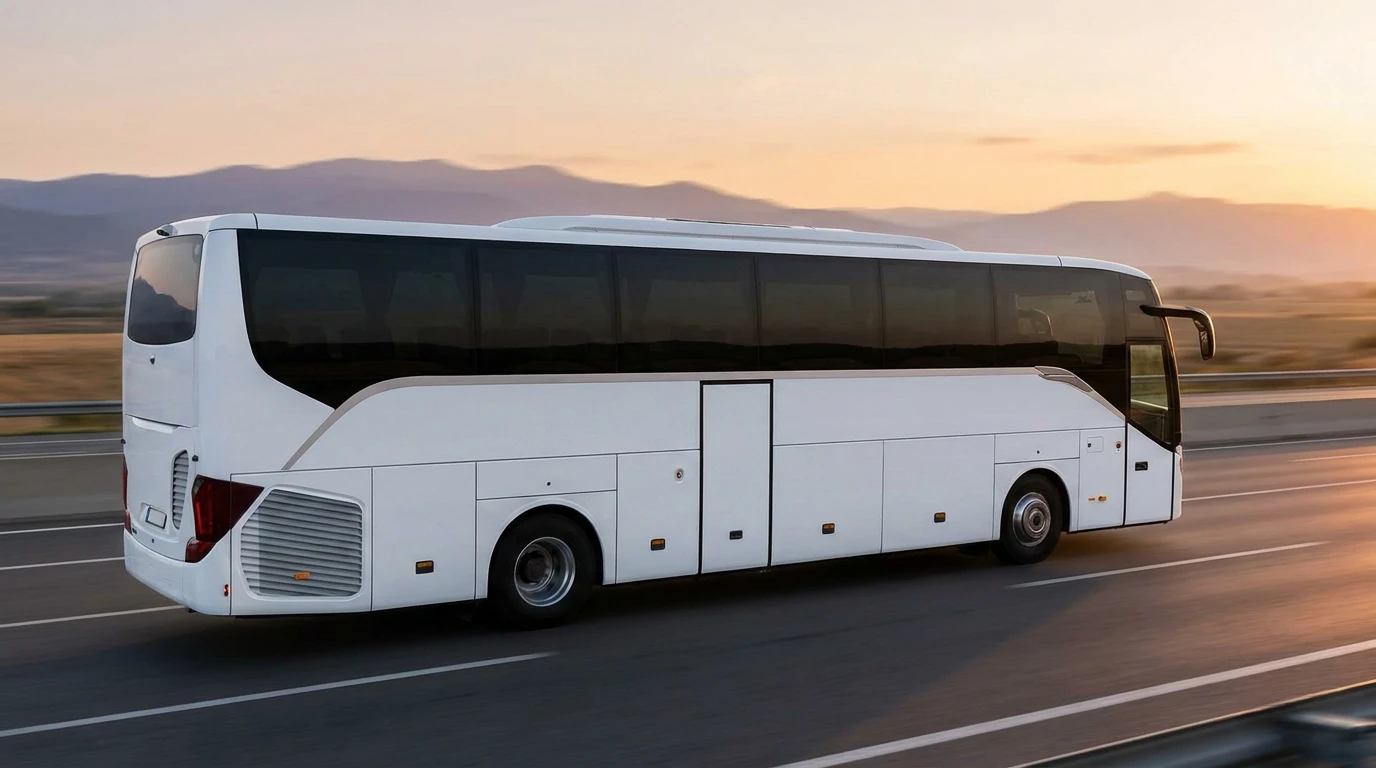
- Aerodynamic exterior. Smooth curved body designed for highway-speed fuel efficiency.
Capacity varies by model and configuration. Full-size motorcoaches from manufacturers like Prevost, MCI, Van Hool, and Setra typically seat 47 to 61 passengers. Executive coaches and minicoaches from the same builders seat 18 to 40, often with upgraded leather interiors and reduced capacity in exchange for premium space.
Most common uses of coach buses
Coach buses serve a wider range of purposes than people realize. The same vehicle that carries a tour group through Yellowstone might run a daily commuter route between two cities the next week.
- Scheduled intercity service. Operators like Greyhound, FlixBus, and Megabus run coach buses on fixed routes between cities, sold by individual ticket.
- Private group charter. Companies, schools, sports teams, wedding parties, and tour operators rent the entire vehicle for a specific trip.
- Tourism and sightseeing. Multi-day tours, day trips to landmarks, and tour operator fleets rely on coach buses for the combination of comfort and luggage capacity.
- Corporate shuttle service. Some companies run dedicated coach buses to move employees between offices, between airports and conference venues, or between the workplace and remote facilities.
- Sports team and band travel. College teams, professional teams, and touring music acts use coach buses (sometimes with sleeper berths) for multi-city tours.
- Casino and event shuttles. Casinos, festivals, and large events charter coach buses to move groups between hotels and venues.
- Funeral and dignified transport. Some operators specialize in coach buses for funeral processions and family transport.
The common thread across all these uses is distance plus group size: when more than 30 people need to travel more than a couple of hours together, a coach bus is usually the most cost-effective and comfortable choice.
Regulations and licensing for coach bus operations
Coach buses are regulated more tightly than ordinary vehicles because of the number of passengers they carry and the distances they cover. The exact rules vary by country, but the general framework is consistent.
In the United States, coach buses fall under the FMCSA. Drivers carrying more than 16 passengers need a Commercial Driver’s License with a passenger endorsement (CDL-P). Many states add additional certification or vehicle classifications based on weight and capacity. Federal hours-of-service rules limit how long a driver can be behind the wheel.
In the European Union, coaches are classified as M2 (up to 5 tonnes) or M3 (over 5 tonnes) vehicles under UNECE Regulation 107, which governs construction, safety, and accessibility. Drivers need a category D license plus the Driver Certificate of Professional Competence (Driver CPC), which requires periodic renewal training.
Most other countries follow some adaptation of one of these two frameworks. Common requirements across jurisdictions include mandatory seat belts, regular vehicle inspections, driver background checks, accessibility provisions (lifts or ramps), and onboard data recorders.
Where coach buses fit among other types of passenger buses
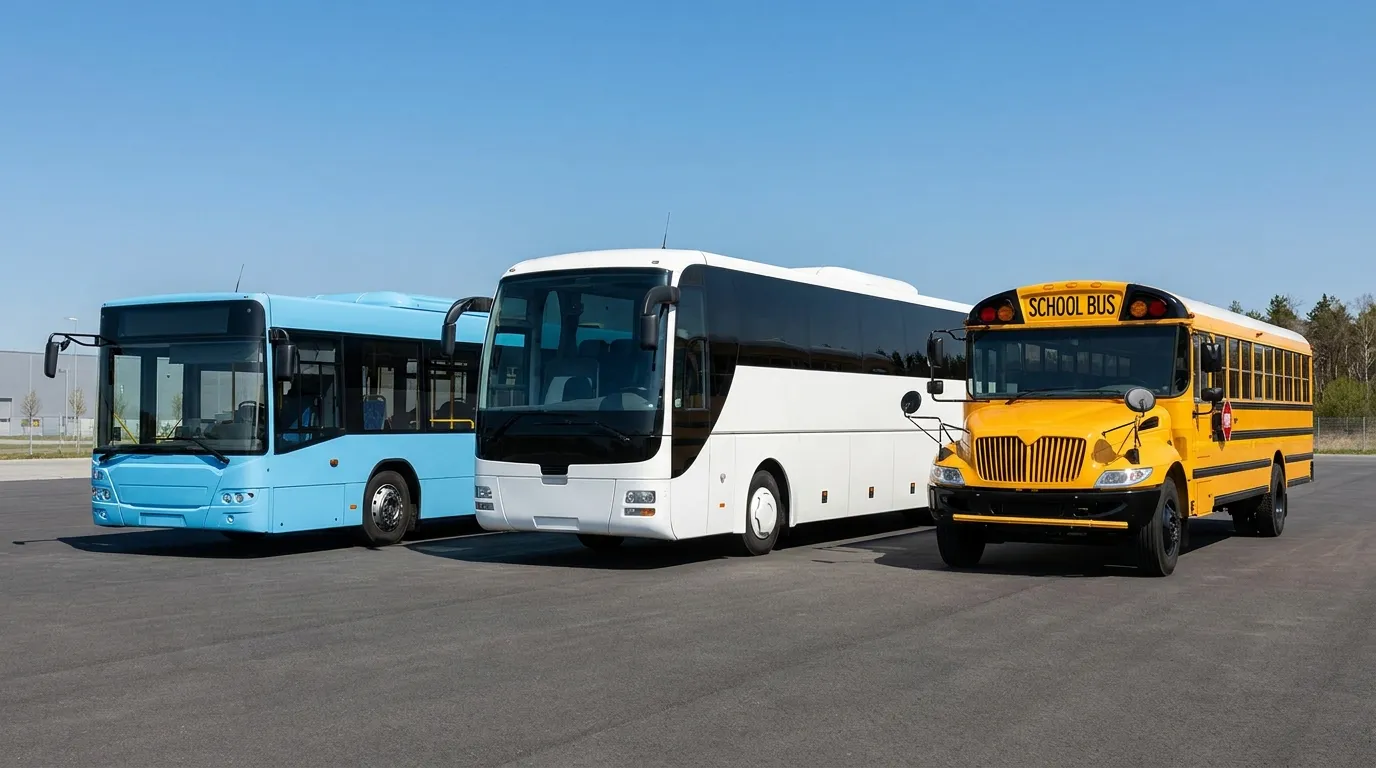
The coach bus is one option in a broader landscape of passenger vehicles. A quick map of the most common types helps put it in context:
- Transit bus. City bus on fixed urban routes; low-floor, high capacity, frequent stops.
- School bus. Yellow body, reinforced frame, designed strictly for student transport on short trips.
- Minibus or shuttle. 12 to 30 passengers; airport runs, hotel shuttles, short-distance group transport.
- Coach bus or motorcoach. 30 to 61 passengers; long-distance comfort and luggage capacity. The subject of this article.
- Double-decker bus. Two passenger levels; used for high-capacity intercity service and sightseeing in some markets.
- Sleeper coach. Coach bus with bunk berths instead of (or in addition to) seats; used for overnight tours and crew transport.
- Articulated bus. Two rigid sections connected by a flexible joint; high-capacity transit use in dense corridors.
- Trolley-style bus. Tourist-focused vehicles styled like vintage trolleys.
A coach bus occupies the middle of this map: not the highest capacity (transit and double-deckers carry more), not the most flexible (minibuses fit in tighter places), but the best balance of distance, comfort, and capacity for groups that need all three.
Frequently asked questions
What is the difference between a coach bus and a regular bus?
A coach bus is built for long-distance travel with reclining seats, a luggage compartment, and amenities like Wi-Fi and onboard restrooms. A regular (transit) bus is built for short urban trips with high passenger turnover, basic seating, and standing room. Coach buses cover hundreds of miles between stops; transit buses stop every few blocks.
How many passengers does a coach bus hold?
A standard full-size coach bus seats between 47 and 61 passengers depending on the configuration. Executive coaches and minicoaches with upgraded interiors typically seat 18 to 40. The capacity varies based on seating layout (2-2, 2-1, or 1-1), legroom, and onboard amenities like restrooms.
What does motorcoach mean?
Motorcoach is the official US designation for a coach bus, defined by the Federal Motor Carrier Safety Administration as a bus with an elevated passenger deck located over a baggage compartment. The term refers to the same vehicle commonly called a coach bus, but is more common in regulatory and industry settings.
Is a coach bus the same as a charter bus?
Not exactly. A coach bus is a vehicle category, a high-floor, long-distance bus. A charter bus is any bus rented privately for a specific group. Most charter trips use coach buses, but smaller minibuses and shuttles can also be chartered. So coach bus describes the vehicle; charter bus describes the use.
Coach buses occupy a specific niche in the passenger transport landscape: long enough trips that comfort matters, large enough groups that smaller vehicles don’t make sense, and routes that don’t justify a transit bus or a train. Whether they are running scheduled intercity service, hauling a tour group across a country, or shuttling executives between offices, the core design (high floor, reclining seats, luggage compartment, highway-grade powertrain) has stayed remarkably consistent for decades.
For bus companies operating coach fleets, the operational complexity is rarely in the vehicle itself but in the systems around it: ticketing, route scheduling, parcel service, fleet maintenance, driver compliance, and data on how each route actually performs. QuatroBus is the operating system that brings those moving parts into a single platform built specifically for intercity bus operators.