Tabla de contenidos
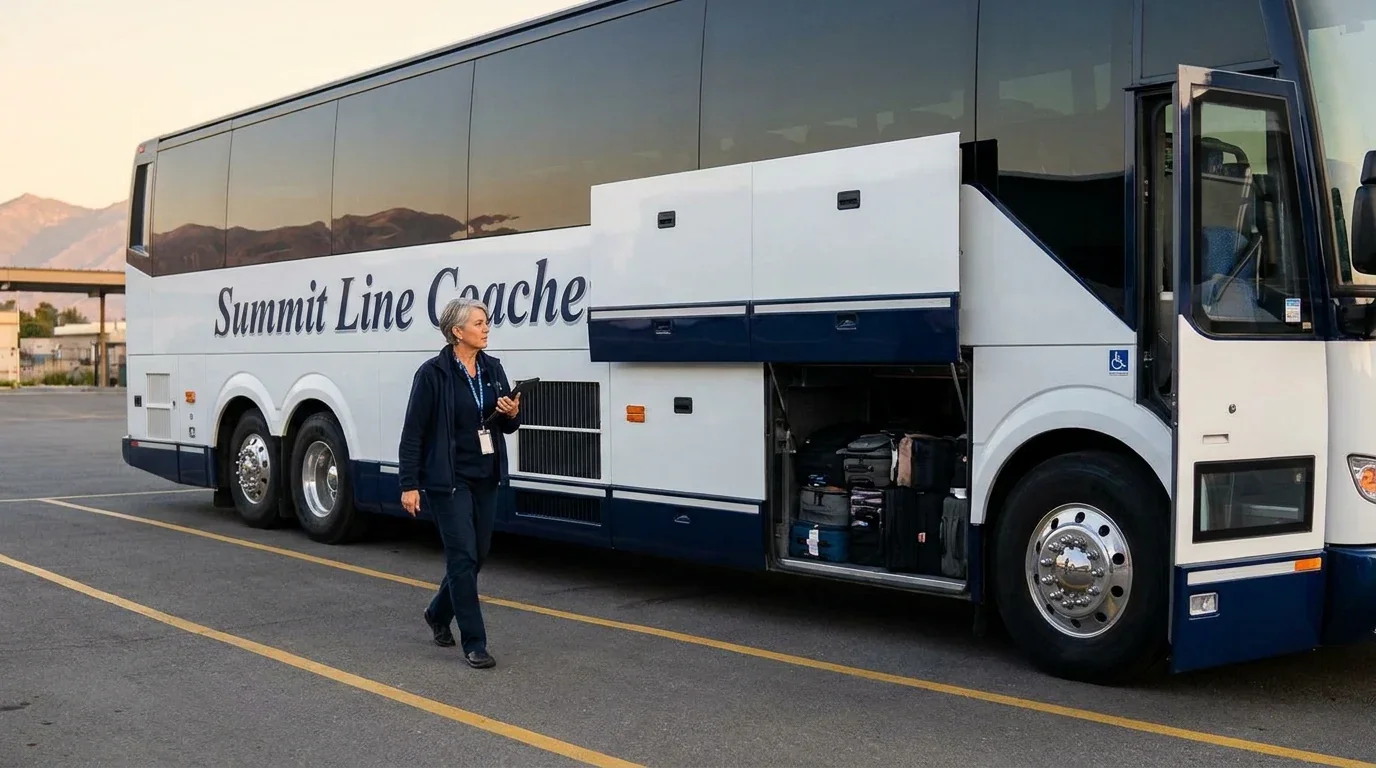
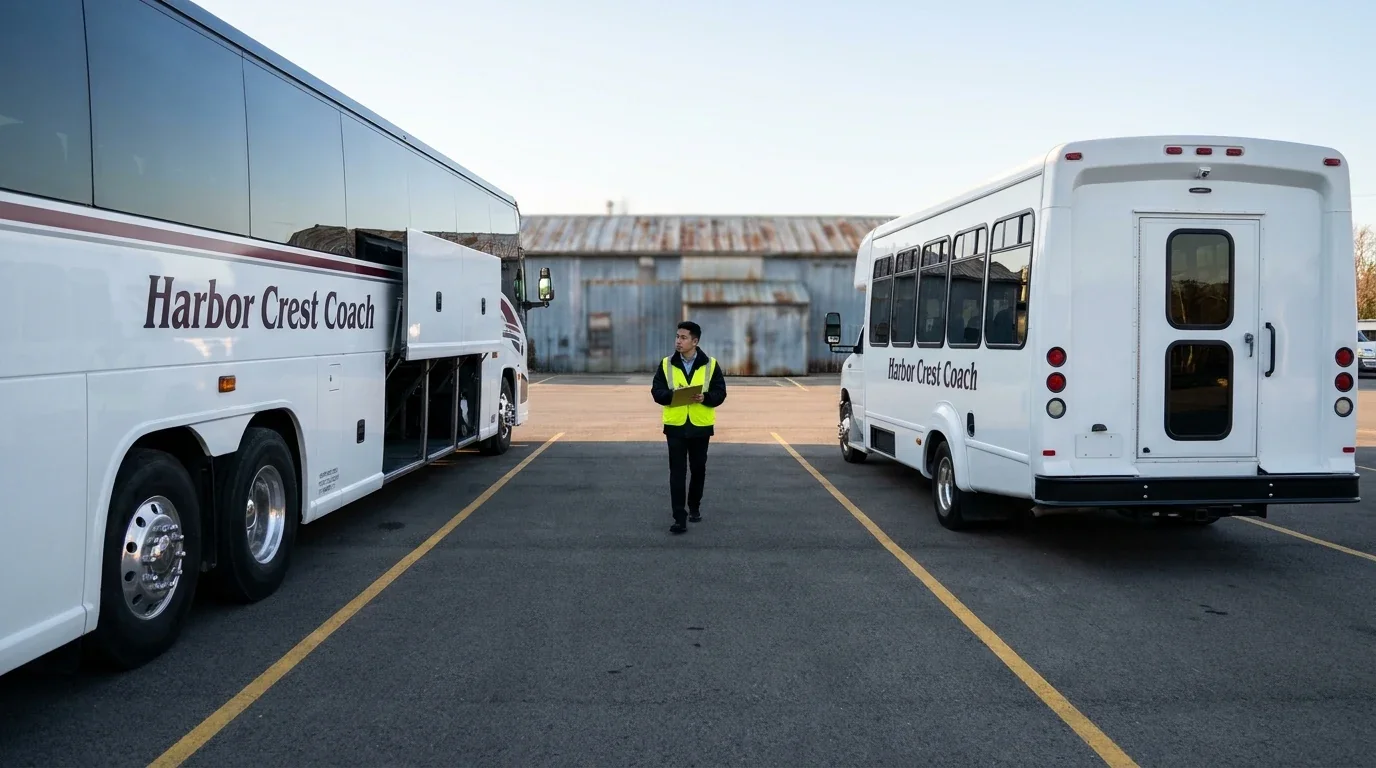
Two vehicles sit side by side in the same yard. One is a 45-foot coach with three axles and a passenger deck raised above its luggage bays. The other is a 33-seat cutaway built on a truck chassis, with a box body and a single rear door. Both carry paying groups on the same weekend charters. On paper, though, they live under different rules for seat belts, insurance and accessibility. Knowing what is a motorcoach, in the sense the regulators use, is what tells an operator which set of rules applies to which unit in the yard.
Most explanations of the word stop at seats, restrooms and Wi-Fi. This one looks at the definition from the operator’s side: what turns a bus into a motorcoach, how that classification separates it from minicoaches, cutaways and transit buses, and why it matters when you buy, insure or quote a vehicle.
What is a motorcoach
A motorcoach is an over-the-road bus: a vehicle built with an elevated passenger deck located over a baggage compartment, designed for intercity, charter and tour service on highways. In the United States it typically measures 35 to 45 feet and seats 45 to 61 passengers, and federal safety law excludes transit and school buses from the term.
The elevated deck is the feature that defines the category. It is not the number of seats, the restroom or the reclining chairs. A 30-seat minicoach built with a raised floor over side-loading baggage bays is an over-the-road bus. A 33-seat cutaway with more seats, but no raised deck, is not. Everyday English uses motorcoach, coach and coach bus almost interchangeably, a point our article on what a coach bus is covers in detail.

The legal definition operators actually work with
Federal motor carrier rules do not define the word in their general definitions. Section 390.5 of the Federal Motor Carrier Safety Regulations defines a bus broadly as any motor vehicle designed or used to transport passengers, taxicabs included. The working definition comes from the Motorcoach Enhanced Safety Act of 2012, which Congress passed as part of MAP-21.
That law gives motorcoach the meaning of an over-the-road bus and then carves out two groups:
- Buses used in public transportation provided by, or on behalf of, a public transportation agency.
- School buses, including multifunction school activity buses.
So a city transit agency running highway-style coaches on a commuter route is not operating motorcoaches under that statute, even if the vehicles look identical to the ones a private charter company runs. A private operator running the same model on scheduled intercity service or charters is.
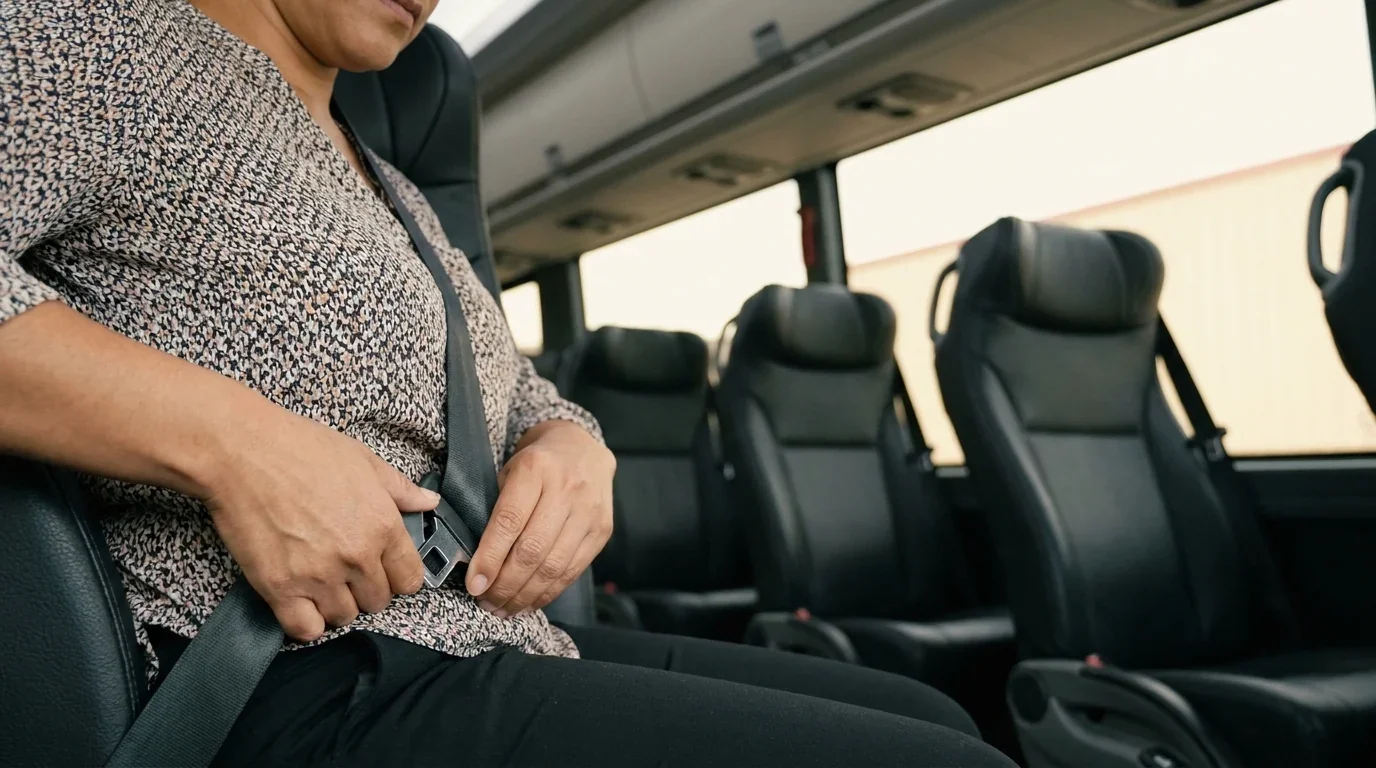
The definition carries real obligations. In its 2013 final rule on occupant protection, the National Highway Traffic Safety Administration required lap and shoulder belts at every passenger seat in all new over-the-road buses, with an effective date of November 28, 2016. The same rule reaches other buses only when their gross vehicle weight rating exceeds 26,000 pounds, and it leaves out transit, school, prison and perimeter-seating buses.
How a motorcoach differs from other buses on paper
The comparison below is the one that matters in a yard with mixed equipment. The rows are the rules that change depending on body type and seating capacity, not the amenities.
| Rule or feature | Full-size motorcoach | Minicoach (raised deck) | Cutaway or minibus |
|---|---|---|---|
| Body | Elevated deck over baggage bays, 35 to 45 ft | Elevated deck over baggage bays, shorter body | Bus body on a truck or van chassis, no raised deck |
| Over-the-road bus | Yes | Yes | No |
| Passenger seat belts on new units (FMVSS 208, since 2016) | Required | Required | Only if GVWR is above 26,000 lb |
| Minimum for-hire liability coverage (FMCSA) | $5 million (16 or more seats) | $5 million (16 or more seats) | $5 million with 16 or more seats; $1.5 million with 15 or fewer |
| CDL passenger endorsement | Required | Required | Required if designed for 16 or more, driver included |
| ADA over-the-road bus rules (49 CFR Part 37, Subpart H) | Apply | Apply | Other ADA vehicle provisions apply instead |
The insurance row is where many smaller operators are surprised. Coverage minimums for interstate for-hire passenger carriers depend on seating capacity, not on whether the vehicle is a motorcoach: the FMCSA licensing and insurance requirements set $5 million for vehicles seating 16 or more passengers and $1.5 million for 15 or fewer. A 20-seat cutaway and a 56-seat coach land in the same bracket. The wider picture of federal obligations is in our overview of DOT compliance for bus and motorcoach operators.
What sits under the deck and behind the driver
The physical layout follows from the raised floor. Because passengers sit above the running gear, the space between the axles becomes baggage bays that open from both sides of the coach. That is why motorcoaches dominate charters, tours and intercity routes where every passenger checks a suitcase, and why intercity operators can also carry package express in the same bays.
A full-size coach usually rides on three axles, with a tag axle behind the drive axle to carry the weight of a 45-foot body. The engine sits at the rear, the single entry door at the front right, and the driver works from a raised position with a clear view over traffic. Inside, the standard is forward-facing reclining seats in a 2-2 layout, an onboard restroom on most units built for trips over two hours, climate control and overhead racks.
None of that is what makes the vehicle a motorcoach legally. A coach without a restroom or Wi-Fi is still one. A cutaway with leather seats and a restroom is still not.
Why the classification matters when you buy, insure or quote
The definition stops being academic the moment an operator adds a vehicle to the fleet. Three situations come up again and again:
- Buying used equipment. Anyone browsing motorcoach for sale listings will find plenty of coaches built before the 2016 belt requirement. The rule applies to new manufacture, so those units can stay in service without retrofits, but school districts, universities and corporate clients increasingly write seat belts into their charter contracts. A cheaper pre-2016 coach can cost you bids.
- Insuring the fleet. Underwriters price a motorcoach differently from a minibus even when both sit in the $5 million federal bracket, because the exposure per crash is different. Knowing which units are over-the-road buses, their seating capacity and their annual mileage makes the renewal conversation shorter.
- Quoting a charter. A group of 28 can travel in a minicoach or a cutaway, and the customer sees one price. Your cost per hour is not the same for both, and neither is the experience. Matching vehicle class to the trip is part of pricing charter bus trips profitably; the use itself, as opposed to the vehicle, is what our piece on what a charter bus is explains.
There is also the driver side. Every motorcoach requires a commercial driver’s license with a passenger endorsement, and drivers moving from cutaways to 45-foot coaches need time behind the wheel of a vehicle with a tag axle, rear engine and different turning geometry before they take a full load onto a mountain grade.
How big the motorcoach industry is today
The 2025 Motorcoach Census published by the American Bus Association Foundation counted 50,968 motorcoaches operated by 1,891 companies in the United States and Canada, 49,543 of them in the US. The fleet grew 4.7% while the number of carriers fell 3.5%, which points to consolidation: fewer companies running more coaches.
Most of those companies are still small. According to the same census, 87.3% operated fewer than 25 motorcoaches, and 86.9% offered charter service, the most common line of business in the industry. The average coach covered 40,297 miles in 2025.
For a company with 8 or 15 coaches, that mileage is spread across charters, tours, scheduled runs and package express, each with its own revenue per mile. Knowing which coach earned what, on which trip, is the difference between a fleet that grows and one that only gets older.
That is the problem QuatroBus was built around: one record per vehicle that ties every ticket, charter, parcel and maintenance entry to the coach that produced it, so the classification you set when you bought the unit carries through to the numbers you read every month. See how it works in our transport management software for bus operators.