Tabla de contenidos
This guide breaks down current charter bus pricing in detail, including the factors that drive costs up, the hidden fees most quotes leave out, and how charter buses compare to alternatives like rideshare or air travel for groups.
Average Charter Bus Rental Prices in 2026
Charter bus rates are typically quoted in one of three ways: per hour, per day, or per mile. Which model applies depends on the type of trip you’re planning.
For short, local trips (city tours, wedding shuttles, game-day transportation), you’ll usually pay an hourly rate with a 5-hour minimum. Multi-day trips are billed by the day, and long-distance, one-way routes are often quoted per mile.
Here’s what you can expect to pay in 2026 across the most common vehicle types:
- Full-size charter bus (50–56 passengers): $150–$285/hour, $1,300–$2,200/day
- Minibus (20–28 passengers): $100–$170/hour, $1,000–$1,400/day
- Executive/luxury motorcoach: $200–$250/hour, $1,800–$2,500/day
- School bus (up to 47 passengers): $55–$70/hour, $900–$1,300/day
These ranges reflect averages across U.S. markets. Prices can vary significantly between cities: a charter bus in New York or San Francisco will cost more than one in Nashville or Charlotte.
To put it in perspective: a full-size bus carrying 50 passengers at $2,000/day works out to $40 per person. That same group taking individual rideshare trips would spend several times that amount.
What Affects Charter Bus Pricing
No two charter bus quotes are the same. Here are the main factors that determine what you’ll pay:
Trip distance and duration. This is the biggest cost driver. A 6-hour local shuttle will be priced differently than a 3-day cross-state trip. Longer trips mean more fuel, more driver hours, and potentially a second driver if the route exceeds 10 consecutive hours of driving, which is the maximum allowed under FMCSA regulations before an 8-hour rest break.
Group size and bus type. Larger buses cost more, but the per-person cost drops as you fill seats. A 56-passenger motorcoach costs $100–$200 more per day than a minibus, but if you have 50 people, the per-person rate is significantly lower than splitting into three minibuses. Matching the right vehicle to your headcount is one of the easiest ways to control costs.
Time of year. The charter bus industry has a clear peak season from April through June, driven by graduations, proms, school field trips, and weddings. Booking during this window typically means higher rates and less availability. Weekends are also more expensive than weekdays year-round.
Pickup location and deadhead mileage. If the charter company’s depot is far from your pickup point, you’ll pay for the empty miles the bus travels to reach you. This is called deadhead mileage, and it can add hundreds of dollars to a quote. Choosing a provider based near your departure point reduces this cost.
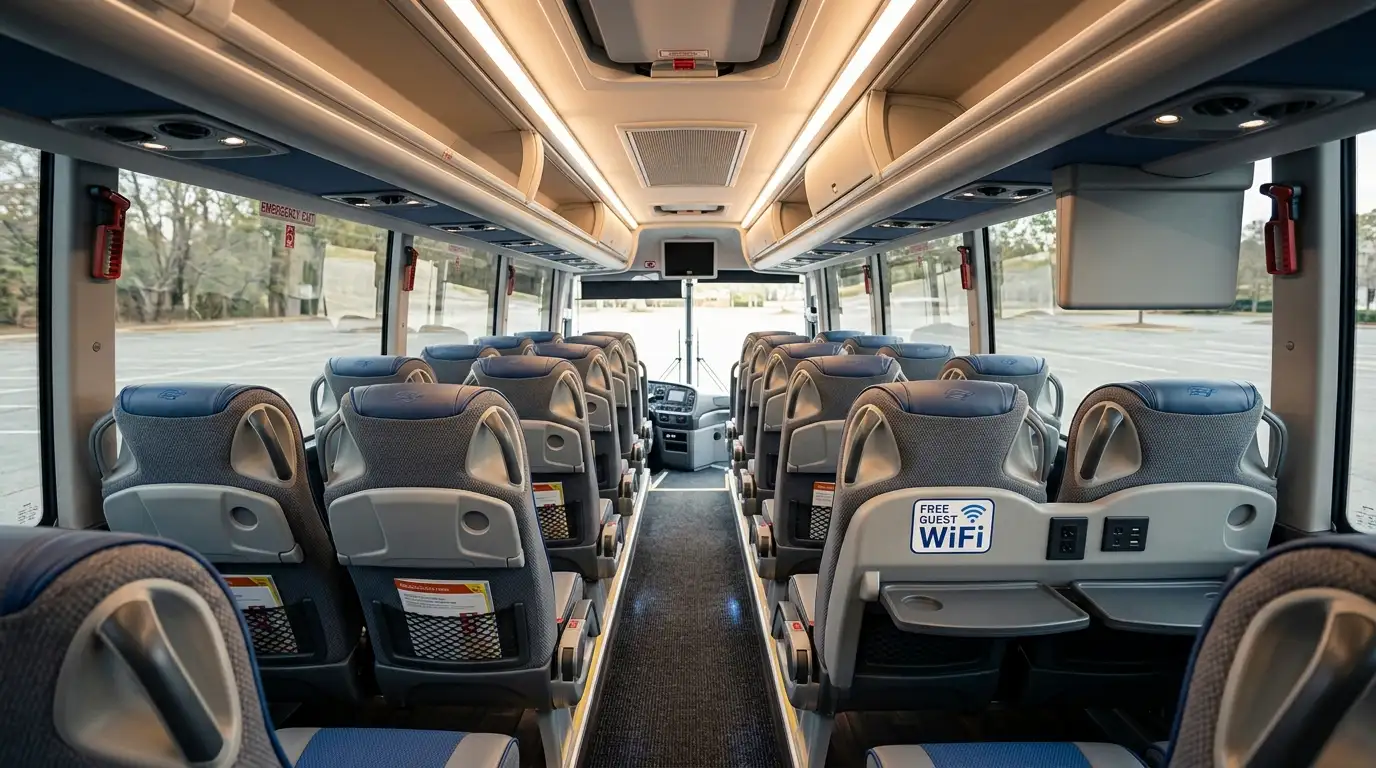
Amenities. Standard amenities like air conditioning and reclining seats are usually included. Premium features like WiFi, onboard restrooms, power outlets, flat-screen TVs, and ADA accessibility may increase the rate, though many modern motorcoaches include them at no extra charge. Always ask what’s included before comparing quotes.
Charter Bus Cost vs. Other Group Transportation Options

When you see a $2,000 quote for a charter bus, it might seem expensive at first glance. But group transportation costs only make sense when you compare the per-person price against alternatives.
Charter bus vs. rideshare. A group of 40 people traveling 20 miles by rideshare would pay roughly $25–$35 per person, totaling $1,000–$1,400 for a single one-way trip. The same trip on a charter bus costs $400–$700 total. And rideshare prices are subject to surge pricing during events or peak hours, while charter bus rates are locked in at booking.
Charter bus vs. flights. For regional trips under 300–500 miles, a charter bus is almost always cheaper than airfare when you factor in tickets, baggage fees, ground transportation on both ends, and the time spent at airports. A bus also gives you door-to-door service with no layovers.
Charter bus vs. personal cars. Driving separately means paying for fuel, tolls, and parking for every vehicle. For a group of 40 in 10 cars, parking alone at a downtown venue can cost $200–$400. A single charter bus eliminates that expense entirely, plus there’s no coordination headache.
The math almost always favors a charter bus once your group exceeds 15–20 people. Below that threshold, a minibus or sprinter van may be a better fit.
Hidden Costs Most Quotes Don’t Include
A charter bus quote typically covers the vehicle and driver for the agreed time or distance. But several additional costs can show up on your final bill if you don’t ask about them upfront:
- Driver tip. Not included in the quote, but expected. The industry standard is 10–15% of the total rental cost. For a $2,000 rental, that’s $200–$300.
- Driver lodging. If your trip spans multiple days, you’re responsible for booking and paying for your driver’s hotel room. Plan for at least a 3-star hotel so they’re well-rested for the road.
- Tolls and parking. Highway tolls and venue parking permits are typically passed on to the renter. Ask about the route and check parking costs at your destination in advance.
- Overtime and extra mileage. If your event runs longer than planned or you add unscheduled stops, expect additional charges. Most companies bill overtime at the hourly rate, and extra mileage is charged per mile.
- Cleaning fees. Some providers charge a fee if the bus is returned in poor condition, especially after parties or events where alcohol is served.
The best way to avoid surprises is to request an all-inclusive quote and ask specifically what is not included in the price.
5 Ways to Reduce Your Charter Bus Cost
You don’t have to sacrifice quality to stay within budget. These five strategies can lower your bus rental cost per day without cutting corners:
- Book early. Availability drives pricing. Booking 4–8 weeks in advance, especially during peak season, gives you access to better rates and more vehicle options.
- Travel midweek or off-season. Wednesday departures cost less than Saturday ones. And booking outside the April–June peak window can save 10–20% on the same trip.
- Right-size your vehicle. Don’t rent a 56-passenger motorcoach for 30 people. A minibus at $1,000–$1,400/day is significantly cheaper than a full-size coach at $1,300–$2,200/day. Confirm your headcount before requesting a quote.
- Minimize deadhead mileage. Choose a charter company near your pickup location. If your group is departing from a city with multiple providers, compare quotes from local operators first.
- Plan a detailed itinerary. Every unplanned stop or detour can trigger extra charges. Having your full route and schedule finalized before you book ensures the quote matches the actual trip.
Frequently Asked Questions About Charter Bus Pricing
How much does it cost to rent a charter bus for a day?
A full-size charter bus (50–56 passengers) typically costs between $1,300 and $2,200 per day in 2026. Minibuses for smaller groups range from $1,000 to $1,400 per day. Daily rates usually include a set number of miles, with additional mileage billed separately.
What is the average cost per mile for a charter bus?
Charter bus rates per mile range from $3.50 to $7.00, depending on the vehicle type, region, and trip length. Longer trips may qualify for lower per-mile rates due to operational efficiencies.
Is it cheaper to rent a charter bus or fly?
For regional trips under 300–500 miles, a charter bus is typically cheaper than flying when you account for airfare, baggage fees, and ground transportation at each end. Buses also offer door-to-door convenience and eliminate airport logistics.
How much should you tip a charter bus driver?
The industry standard tip is 10–15% of the total rental cost. For a $2,000 rental, a tip of $200–$300 is appropriate. Tips are not included in the rental quote and are given directly to the driver after the trip.
Can I negotiate charter bus prices?
Rates are generally market-driven, but you can often get better pricing by booking early, traveling during off-peak times, or committing to a multi-day or recurring rental. Some companies also offer discounts for nonprofit organizations, schools, or military groups.
Running the buses rather than renting one? The same numbers look very different from the operator’s side of the quote, and we break down that math in the guide on how to price charter bus trips.
For bus operators looking to streamline their own pricing and booking process, managing quotes, fleet availability, and schedules manually becomes harder as the business grows. QuatroBus helps operators centralize ticketing, fleet management, and administration in one platform built for passenger transport companies.